
Daniel Flefil
March 9, 2019 · 7 min read
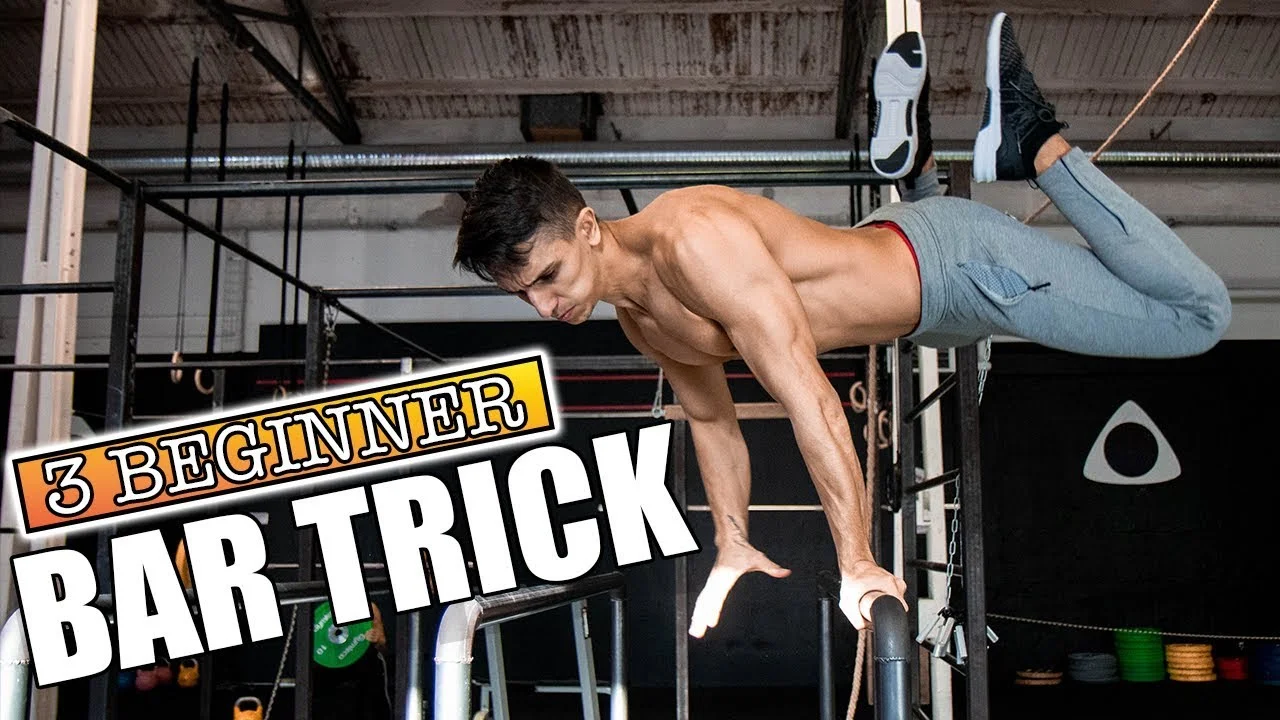
Parallel bars are one of the most accessible pieces of equipment in street workout, and they open up a whole category of tricks that look impressive without requiring extreme strength or years of training. The three moves in this tutorial sit at the beginner level for freestyle: the one leg 360, the jump in, and the B-boy leg. None of them demand advanced upper body strength, but all three require coordination and a clear breakdown of steps. In this tutorial I cover each trick from the first step to the completed movement, with specific drills that help you understand what the body needs to do before committing to the full version. By the end, you will have a working progression for all three.
Watch the Full Tutorial
What Are These Parallel Bar Tricks?
The three tricks in this tutorial use the parallel bars as a platform for dynamic movement rather than static holds or pressing strength. The one leg 360 is a rotation on the bars using one leg as a pivot, ending in a sit position before spinning around. The jump in brings the body from outside the bars to inside them with a jump and catch in one fluid movement. The B-boy leg is a rhythmic leg movement that takes one foot over the bar and uses it to generate momentum for a dismount.
All three are classified as beginner freestyle moves. They fit into combinations with other parallel bar skills and can be practiced at almost any calisthenics park with standard parallel bars. What they share is that the first rep usually takes more attempts than expected, because the coordination involved is unfamiliar. The progressions below make each first rep achievable.
Prerequisites
These tricks require basic parallel bar comfort before the coordination makes sense. You should be able to support your bodyweight on straight arms between the bars for at least 20 to 30 seconds, and have done some basic dip variations so the arms and shoulders are familiar with the bars. You do not need a muscle-up or any advanced skill. The main requirement is feeling stable and controlled when your hands are on the bars and your feet are off the ground.
Trick 1: One Leg 360
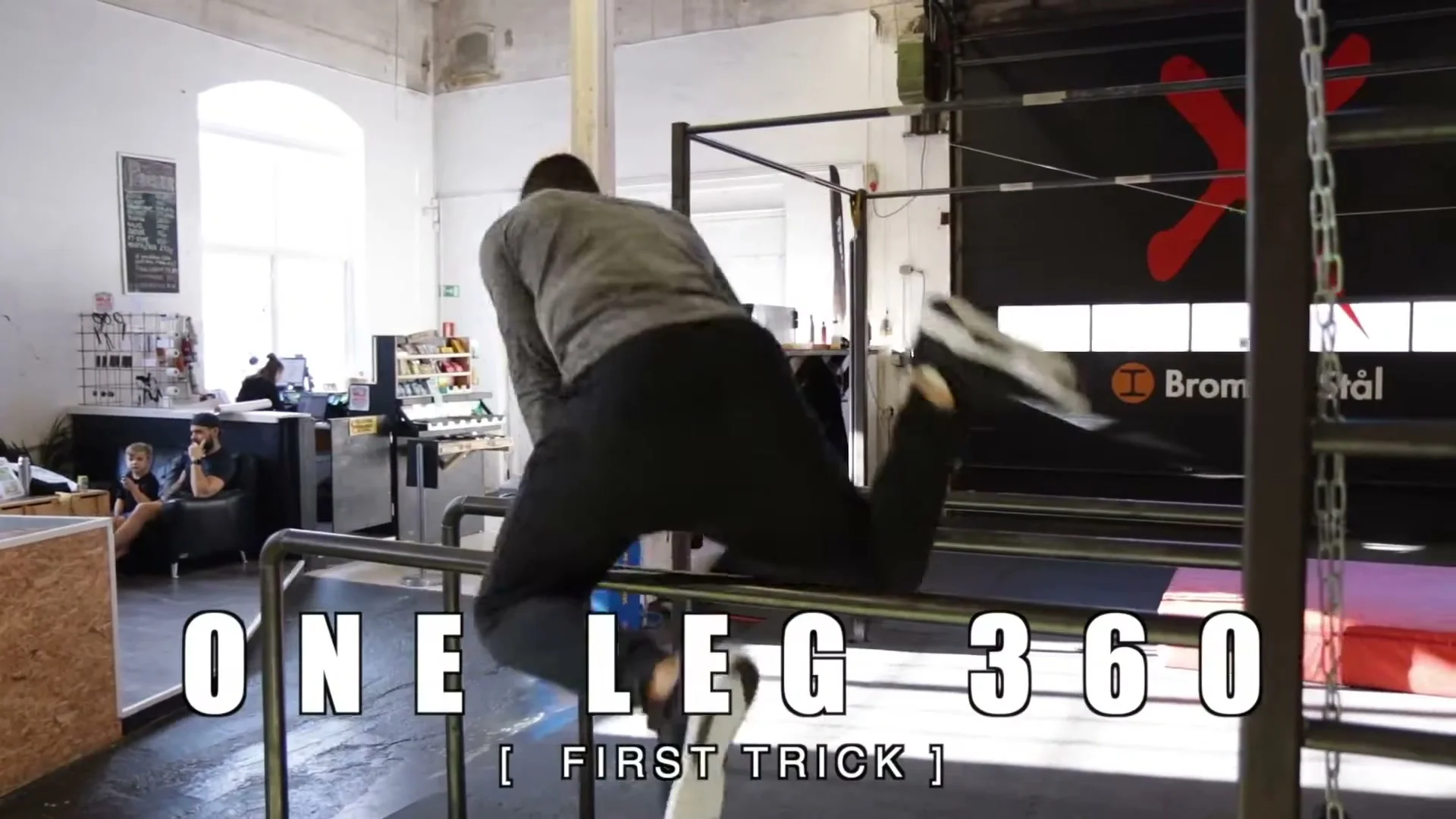
The one leg 360 is a rotation on the parallel bars where one leg stays as a pivot point on the bar while the rest of the body spins 360 degrees around it. It uses a mixed grip and requires generating power with the hips and arms to initiate the rotation.
Step 1: Create power with hips, legs, and arms. Start between the bars with a mixed grip (one hand overhand, one underhand). Swing your hips and legs to build momentum. Feel where the power comes from before adding any spin. Get comfortable generating force from this position without going anywhere yet.
Step 2: Bring one foot in and change one hand simultaneously. Using the momentum from step 1, swing and bring one foot in between the bars while moving one hand to the other bar at the same time. As you land your foot between the bars, your back thigh should rest on the bar you just came from. The other leg stays outside the bars.
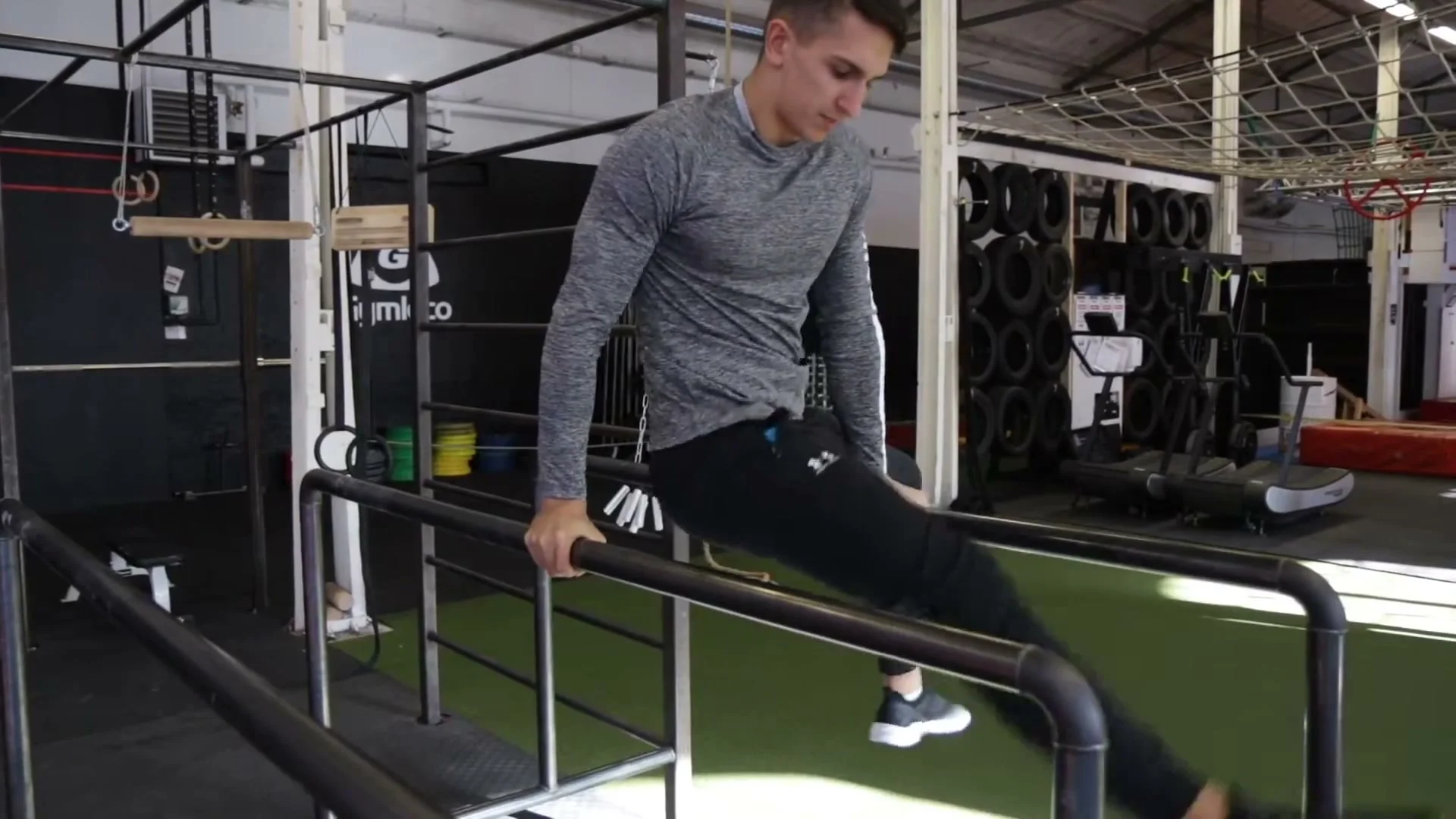
Step 3: Bring the inside leg out and release one hand. Take the leg that is now between the bars and bring it to the other side. At the same time, release one hand so you are now sitting on the bar with both legs on the same side. This is the pivot position.
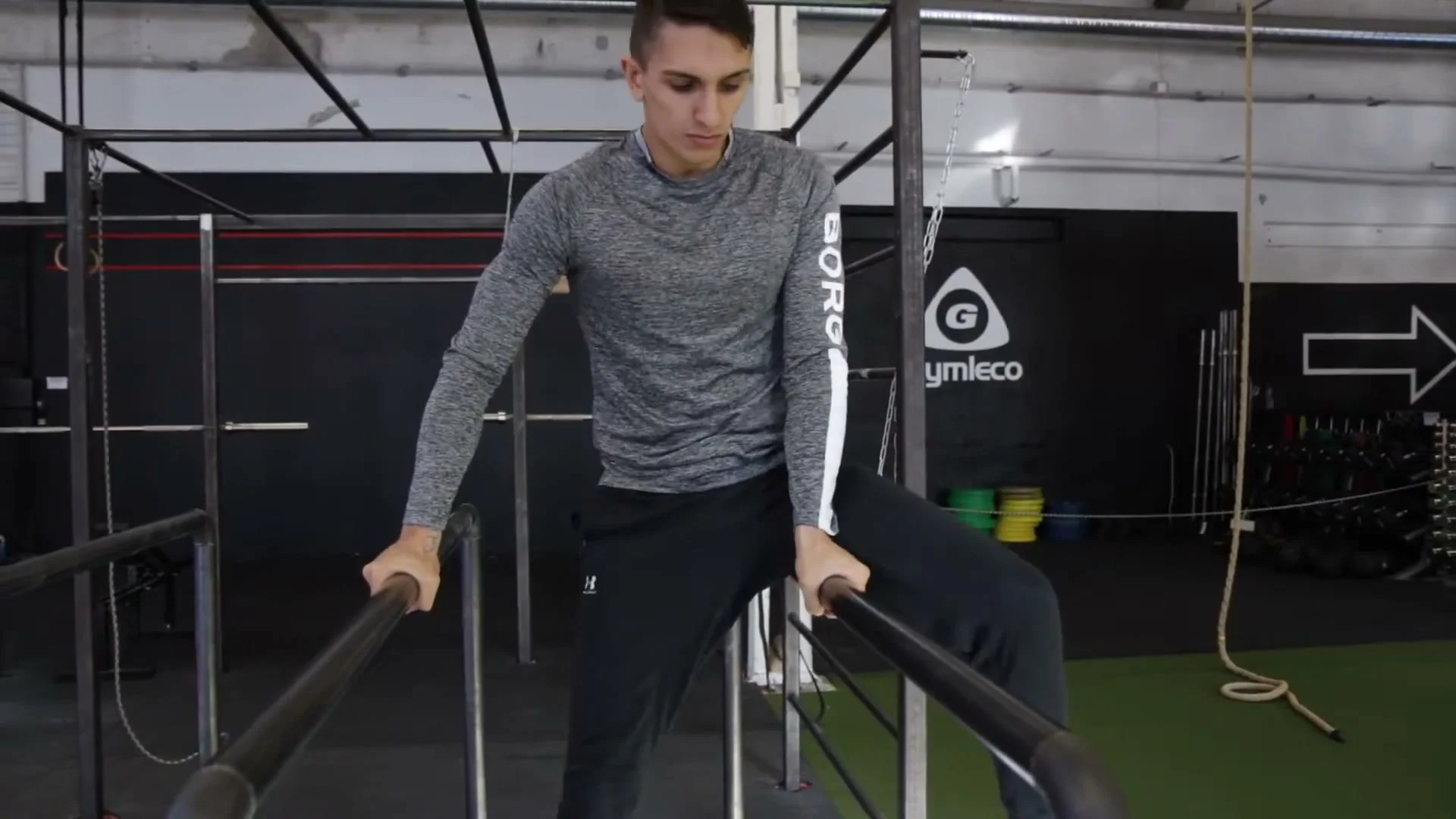
Step 4: Spin back around. From the sitting position, let go of the arm behind you and spin fast toward the side you are turning to. You will roll over your thigh and hip as you spin, and grab the bar again on the other side. The spin completes the 360.
Key Takeaway
Trick 2: Jump In
The jump in is a movement where the body starts outside the parallel bars and jumps in between them, catching the bars with both hands at the end. It looks like a clean, controlled insertion into the bars from the outside.
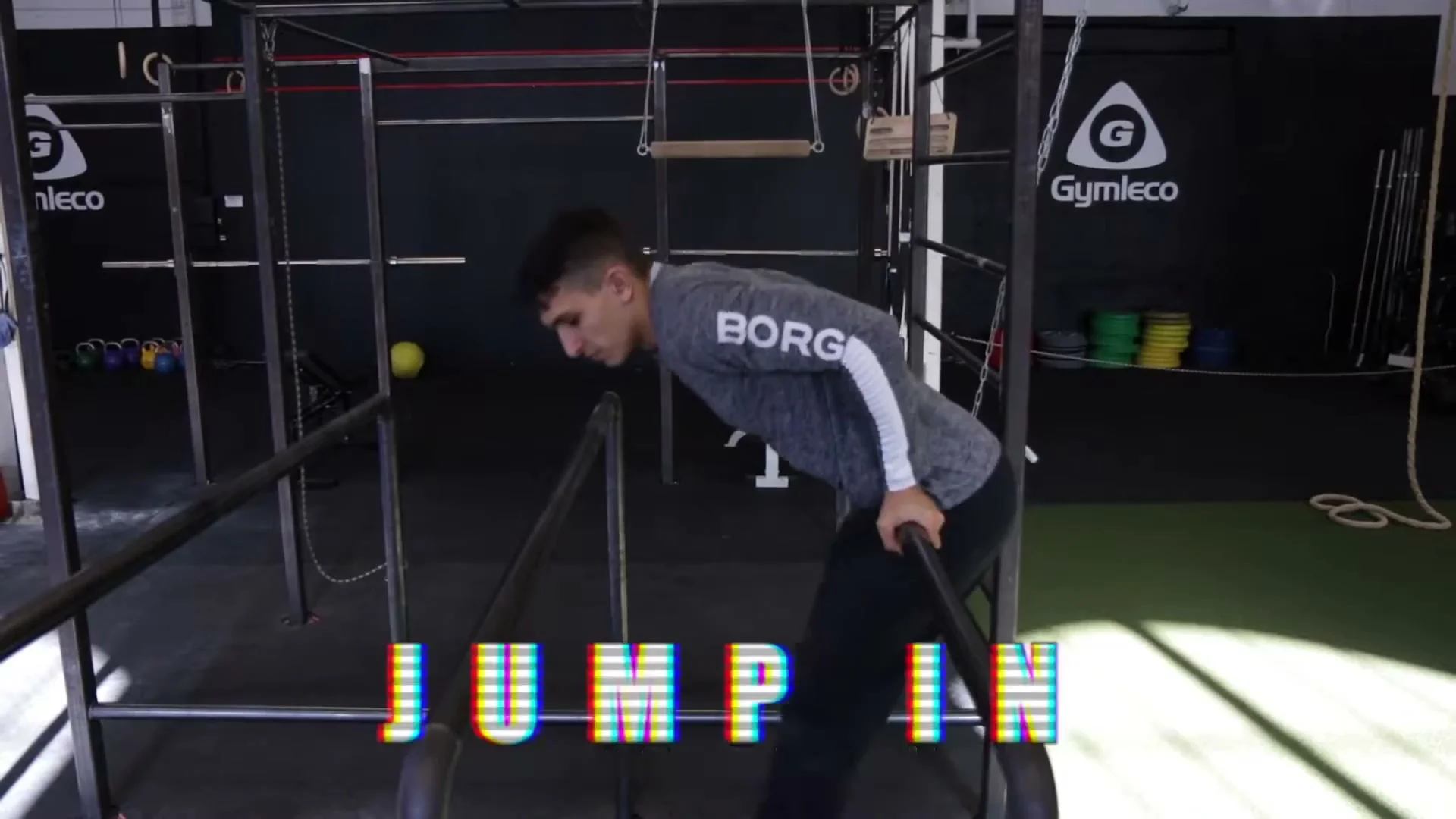
Step 1: Mixed grip and power generation. Start outside the bars with a mixed grip. Practice creating power with your hips, legs, and arms. The jump in requires momentum from the lower body more than arm strength. Understand where that power comes from before trying the jump.
Step 2: Use a band as a height guide. Wrap a resistance band around one of the bars at a low height. Generate power and practice jumping over the band and into the bars. The band gives you a visible target for the jump height. Once you can clear it comfortably, raise the band slightly and repeat. Keep raising it until the band is at bar height.
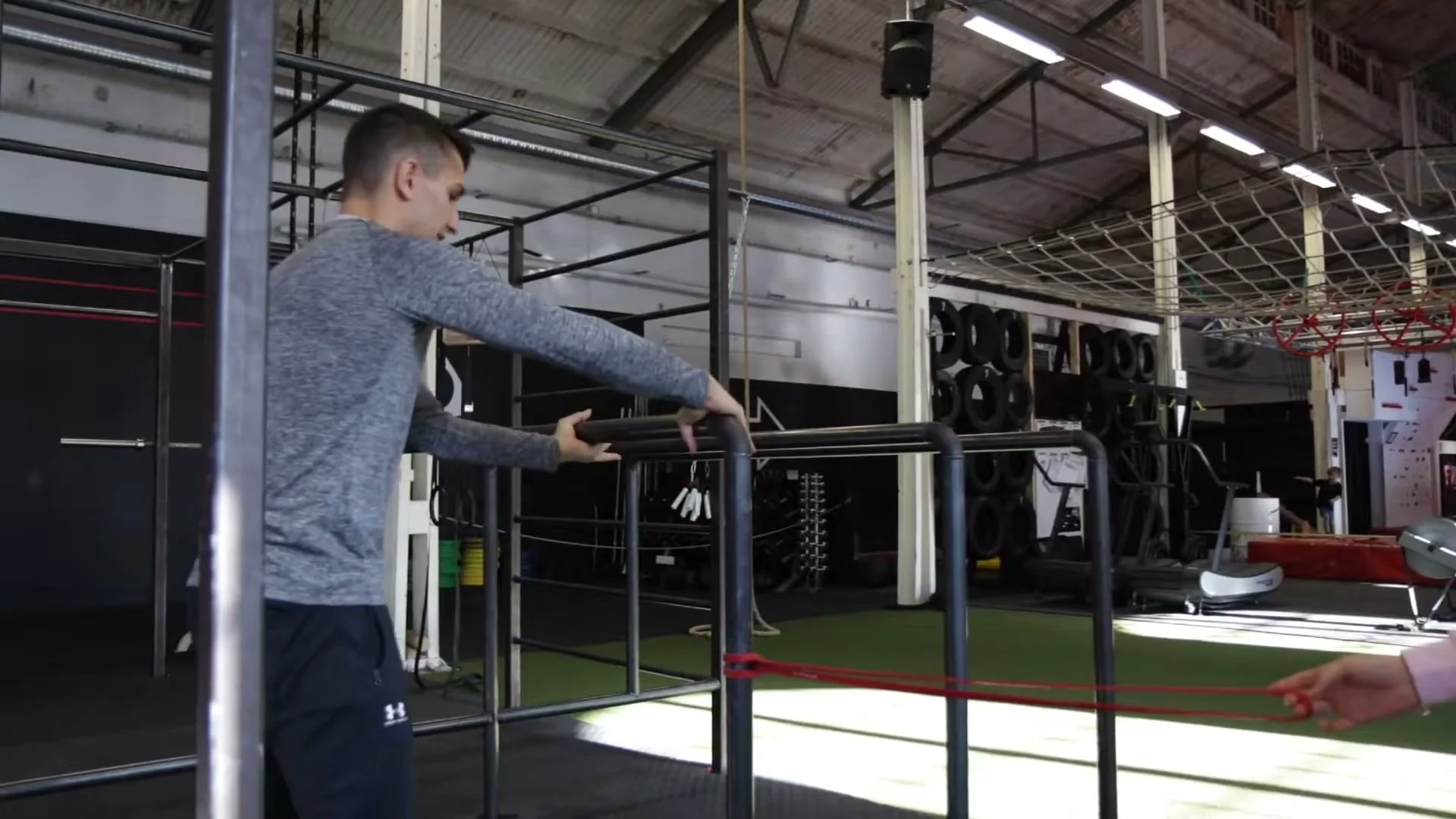
Step 3: Jump in without grabbing. Remove the band. Create power and jump in between the bars without catching them. Let the momentum carry you through. This step isolates the jump and helps you feel the arc of the movement without the grab complicating it.
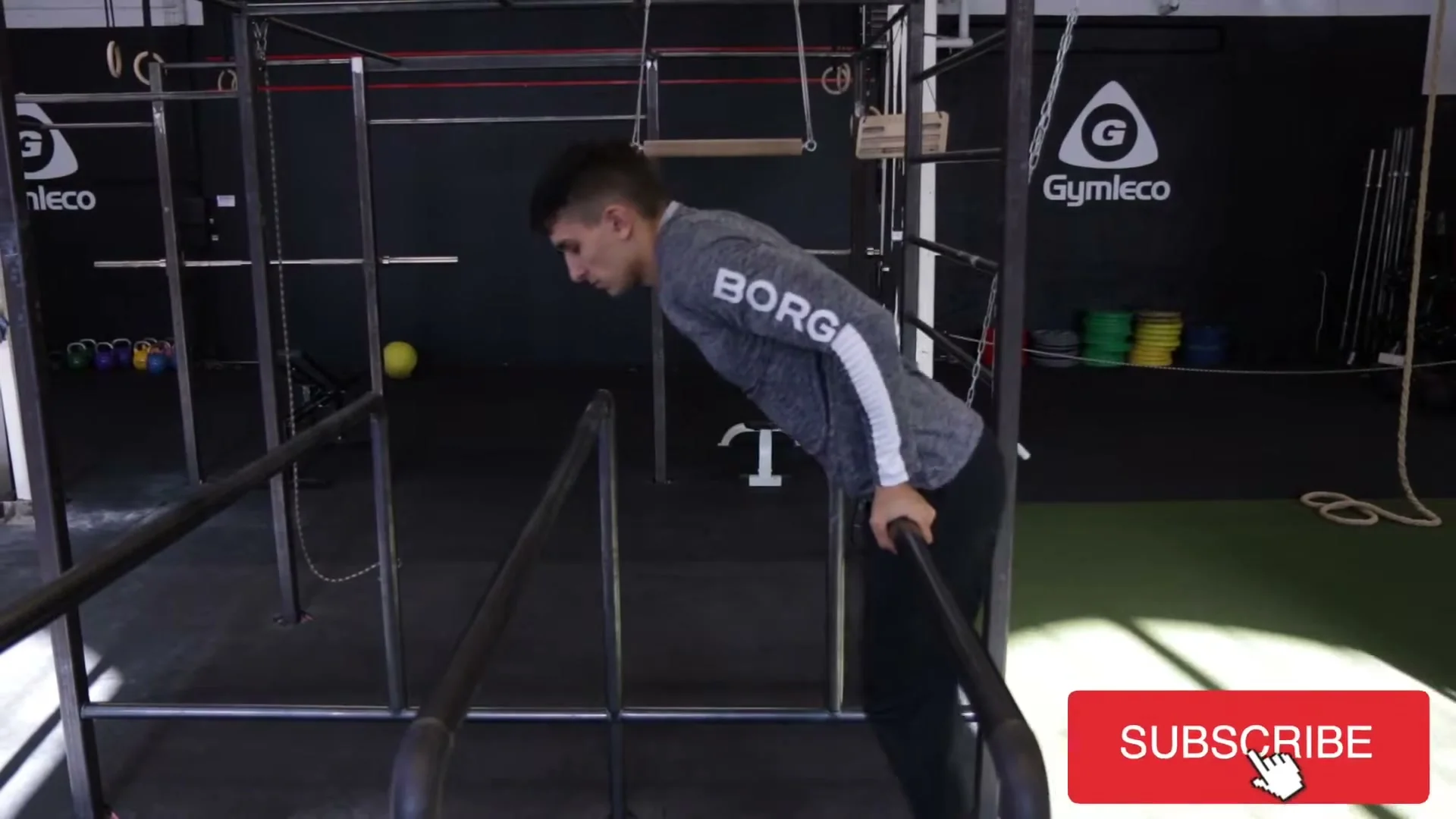
Step 4: Complete the movement with the grab. Perform the full jump in, generating power, jumping over the bar, and catching both bars at the end. The grab completes the trick.
Key Takeaway
Trick 3: B-Boy Leg
The B-boy leg is a parallel bar trick where one foot crosses over the bar and drives the movement into a dismount. It combines a leg swing with an arm transition across the bars.
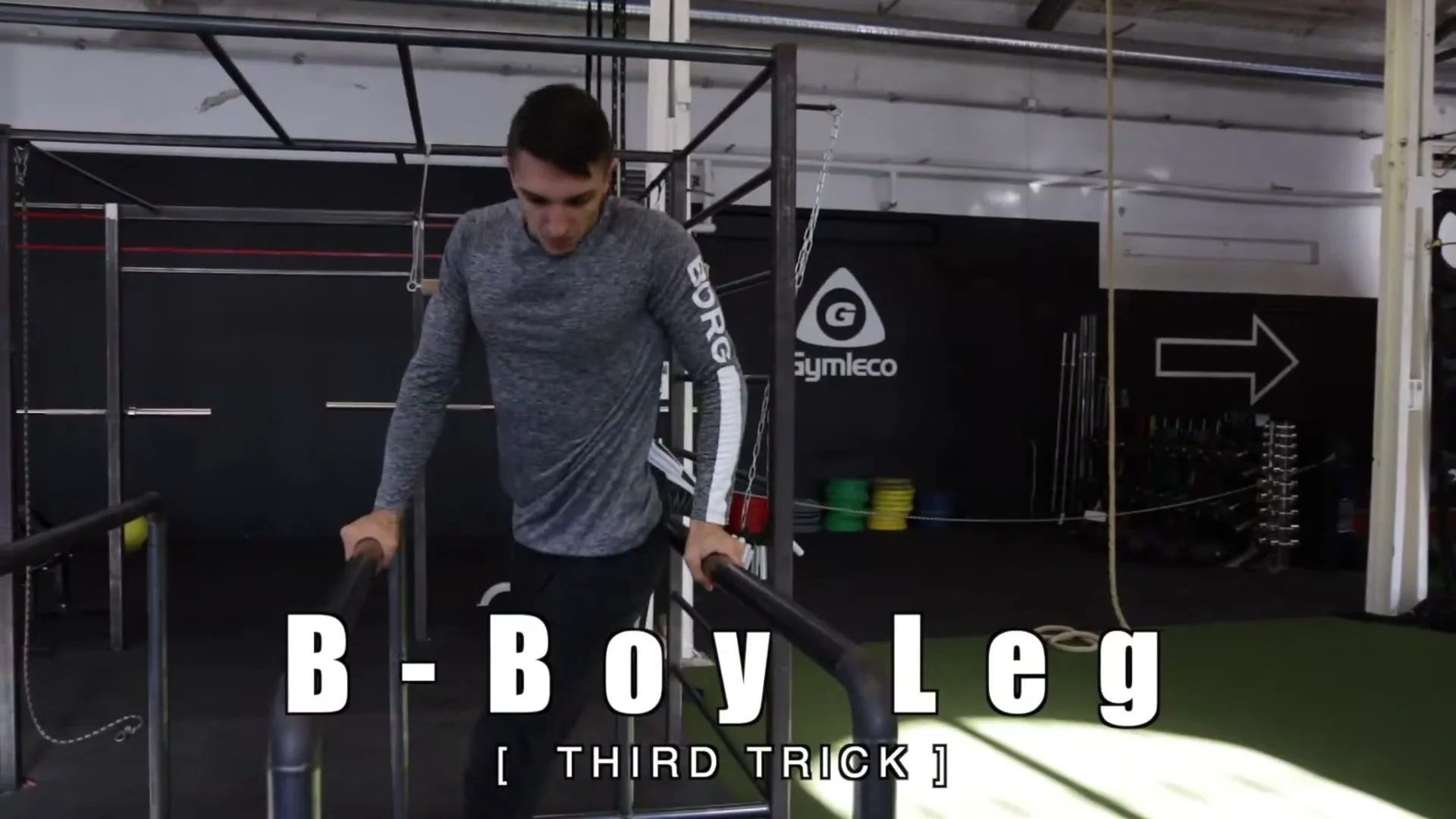
Step 1: Drill the leg movement. Start between the bars with straight arms, feet on the ground. Cross your legs. Bring the rear leg up and onto one bar, then take the other leg out to the side and back in repeatedly. This is a drill only, not the full trick. It teaches the specific leg path the B-boy leg uses and helps you feel the movement before adding power and height.
Step 2: Jump out. Perform step 1, but instead of bringing the leg back in, take it out and jump off, landing on your feet outside the bars. This adds the exit to the drill and gets you comfortable with the dismount direction.
Step 3: Jump up with one leg from outside. Start outside the bars. Generate a small amount of power and jump up onto one bar with one leg while simultaneously moving one hand to the other bar. This is the entry into the trick from outside.
Step 4: Add the forward leg drive. Repeat step 3, but as soon as you land the one leg on the bar, drive the other leg forward immediately to complete the movement. Then bring it out to exit. This connects the entry and the drive into one continuous motion.
Step 5: Combine the full trick. Put all four steps together in one fluid movement from the entry jump to the forward drive to the exit.
Key Takeaway
Common Mistakes
Doing the Foot and Hand Separately in the One Leg 360
Step 2 of the one leg 360 requires the foot and the hand to move simultaneously. Bringing the foot in first and then moving the hand, or vice versa, breaks the coordination and leaves the body in a stuck position. Focus on treating the foot-and-hand transition as a single motion.
Not Generating Enough Power Before the Jump In
The jump in requires real lower body power. Athletes who try to do it with only upper body strength cannot get the height needed to clear the bar. The whole-body swing and leg drive in step 1 of the jump in is not optional. If the jump is consistently too low, return to the band at a lower height and rebuild the power generation.
Skipping the Leg Drill for the B-Boy Leg
The leg movement in step 1 of the B-boy leg looks simple, but it establishes the exact path the leg needs to follow. Skipping it to go straight to the full trick produces a movement where the leg does not follow the right arc and the timing of the entry breaks down. Even if the drill feels easy, do it.
Training Tips
Practice each trick in its own focused block rather than cycling through all three in the same set. The coordination for the one leg 360 is different from the jump in, and mixing them back to back before either is learned causes interference. Spend ten to fifteen minutes on one trick per session before moving to the next.
Use the band drill for the jump in every time you work on it until the full version is consistent. There is no reason to skip it as a warmup drill even after you can do the complete movement. It reinforces the height and power pattern that the full movement depends on.
Film yourself from the side or slightly in front when working on these tricks. The one leg 360 and B-boy leg both involve rotations that are hard to feel in the moment. Video shows whether the leg path and timing are correct when your body's internal feedback is not yet calibrated.
All three tricks can be chained together in a combination once each one is stable on its own. Learning them in this order (one leg 360, jump in, B-boy leg) gives you three distinct movements that flow into parallel bar freestyle combinations. Once these are comfortable, the front flip dismount on P-bars is a natural next challenge.
Frequently Asked Questions About Parallel Bar Tricks
Do I need to be able to do dips before these tricks?
Basic parallel bar support and some dip experience helps, but these tricks do not require strong dip ability. The main requirement is comfortable straight-arm support on the bars for 20 to 30 seconds and enough familiarity with the bars to generate power from a grip position. If you can hold yourself between the bars with straight arms, you have enough to start.
What is a mixed grip on parallel bars?
A mixed grip means one hand is in an overhand position (palm facing away from you) and the other is in an underhand position (palm facing toward you). It is used in the one leg 360 and jump in to make the grip asymmetric, which sets up the rotation direction. Switching to a mixed grip feels awkward at first but becomes natural quickly.
Can I practice these tricks without crash mats?
Yes. None of these three tricks require height that makes a bad landing dangerous. The exits and dismounts are all to the floor from bar height. If you are working on a metal or concrete surface, soft shoes help. The jump in has the most landing impact of the three, so a rubber surface or grass is preferable for early attempts.
How long does it take to learn each trick?
Most athletes with basic parallel bar experience can get their first clean rep of the one leg 360 and jump in within one to three sessions. The B-boy leg takes slightly longer because the entry and exit require more coordination. Consistent reps with good form typically take two to four weeks for each trick.
Which of the three is the hardest for beginners?
The B-boy leg is generally the most challenging because it combines the entry jump, the leg drive, and the exit into a single sequence. The jump in and one leg 360 each have a clearer single moment of commitment. The B-boy leg requires all three phases to work together. The step-by-step breakdown helps significantly, but expect to spend more time on it than the other two.
Can these parallel bar tricks be combined into freestyle combinations?
Yes, and that is one of the best reasons to learn all three. Once stable individually, the one leg 360, jump in, and B-boy leg can be chained with other parallel bar skills like dips, holds, and transitions. They work as entry and exit moves for longer combinations and add visual variety to freestyle routines.
Daniel Flefil
Calisthenics coach with 11 years of experience, co-founder of Calixpert, and organizer of Beast of the Barz, one of the world's largest calisthenics competitions. Based in Stockholm. I write about training, equipment, and everything that goes into building a serious calisthenics practice.
More about Daniel →