
Daniel Flefil
January 22, 2020 · 7 min read
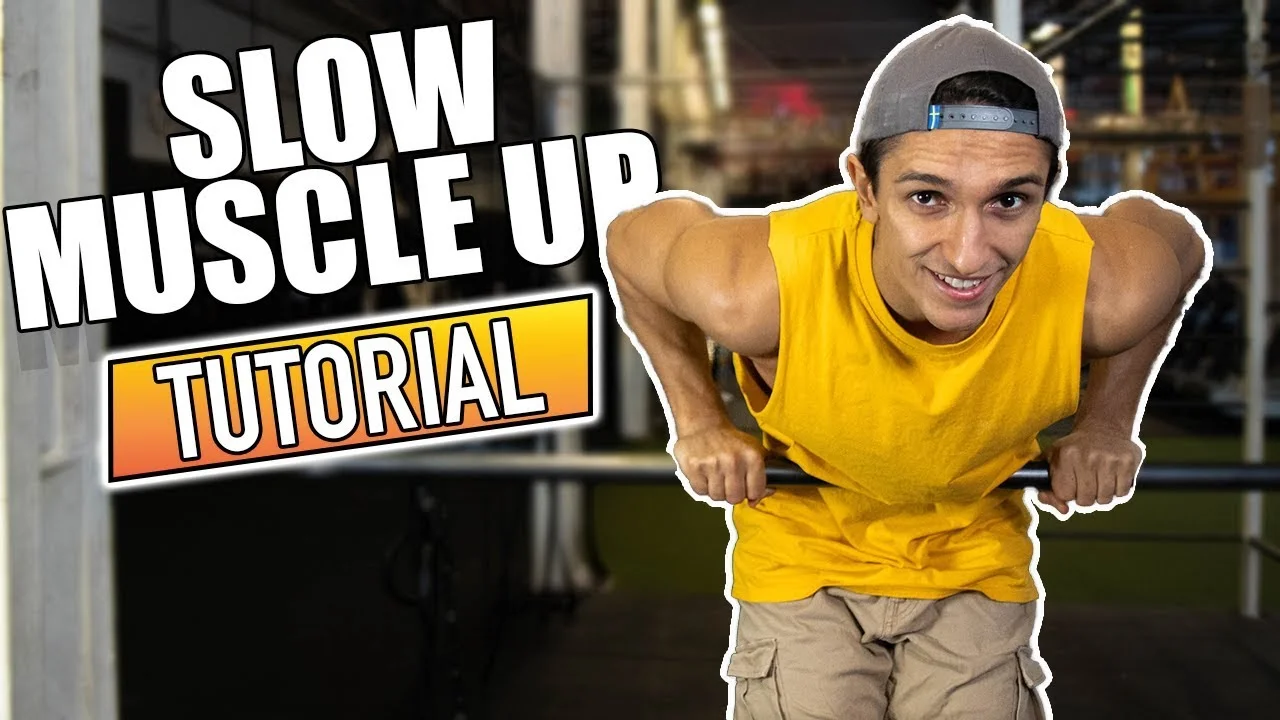
The slow muscle up is a strict version of the muscle up where no swinging or kipping is used. The body pulls through the bar and transitions into a dip using controlled strength alone. It is harder than the kipping version and requires two things the kipping version does not: the false grip and a specific kind of shoulder and elbow strength around the transition point. The five exercises in this tutorial build both. By the end, you will know exactly which exercises to add to your training and how to structure them to reach the slow muscle up.
Watch the Full Tutorial
What Is the Slow Muscle Up?
The slow muscle up is a bar movement where the athlete starts in a dead hang, pulls to the point where the chest is above the bar, then transitions into a dip and presses out to a full support position at the top. No swinging or kipping is involved. The movement relies entirely on pulling strength, false grip, and the ability to push through the hardest point: the transition where the pull-up ends and the dip begins.
The move sits above a standard pull-up or kipping muscle up on the difficulty scale. Athletes who can already do kipping muscle ups sometimes find the strict version harder than expected because the transition demands a type of strength that the kipping momentum bypasses. The false grip is the element that makes the transition possible without a swing.
The slow muscle up is a benchmark strength skill in street workout and calisthenics. Once it is consistent, it opens the path toward static holds at the bar and heavier pulling variations. The false grip also transfers directly to ring muscle ups and other ring-based skills.
Prerequisites
Two strength standards mark the baseline before slow muscle up training begins. The first is five to ten straight bar dips. The dip portion of the slow muscle up requires the ability to press out from below the bar in a deep starting position, so basic dip strength is necessary before the full move is accessible.
The second is three to five chest-to-bar pull-ups. The pull portion needs to bring the chest fully to the bar, not just the chin. Standard chin-over-bar pull-ups are not sufficient. The pull must be strong enough to bring the chest into contact with the bar before the transition begins.
Specific standards before starting:
- 5-10 straight bar dips
- 3-5 chest-to-bar pull-ups
- Comfortable false grip hang (with chalk)
Technique: The False Grip
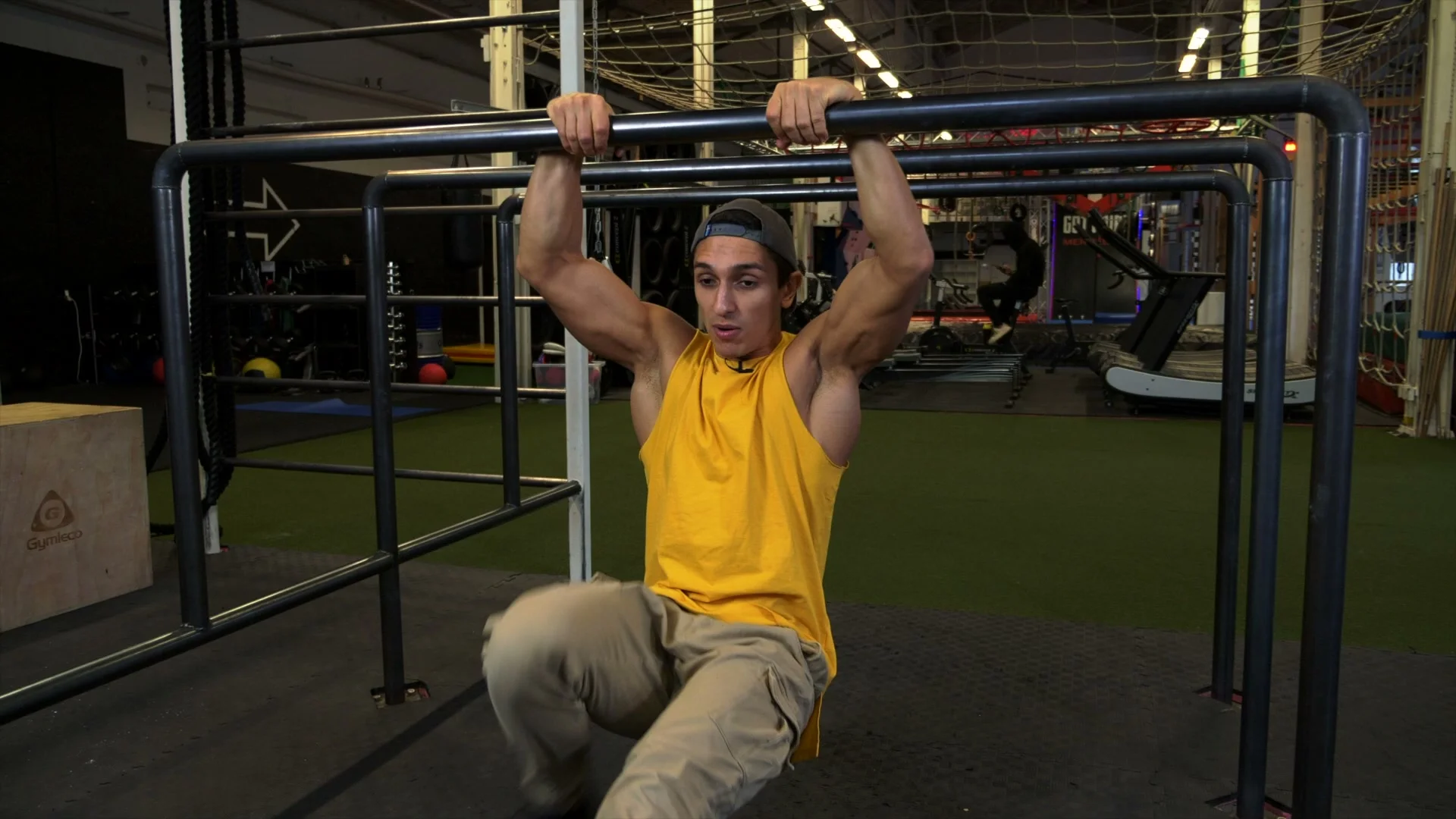
The false grip is the most important technical element of the slow muscle up. Without it, transitioning from the pull-up position to the dip position requires either a momentum-based swing or a very wide elbow movement that is difficult to control. The false grip eliminates both problems.
To take the false grip: grab the bar, then turn the hands so the bar sits over the top of the wrist rather than through the middle of the palm. Twist the hands slightly so the wrists rest on top of the bar. In the early stages, this position causes discomfort and pain in the wrists and hands because the joints are not yet accustomed to the pressure. Chalk on the wrists and palms reduces the friction and makes the grip significantly easier to hold. This is the one accessory worth using for slow muscle up training.
Once the false grip is taken, the pull should go as high as possible. When the chest passes the bar, bring the elbows in and backward simultaneously to transition into the dip position. The elbows stay close to the body throughout. False grip must be maintained from start to finish. If the false grip is lost at any point, the transition fails.
Key Takeaway
Exercise 1: False Grip Hang
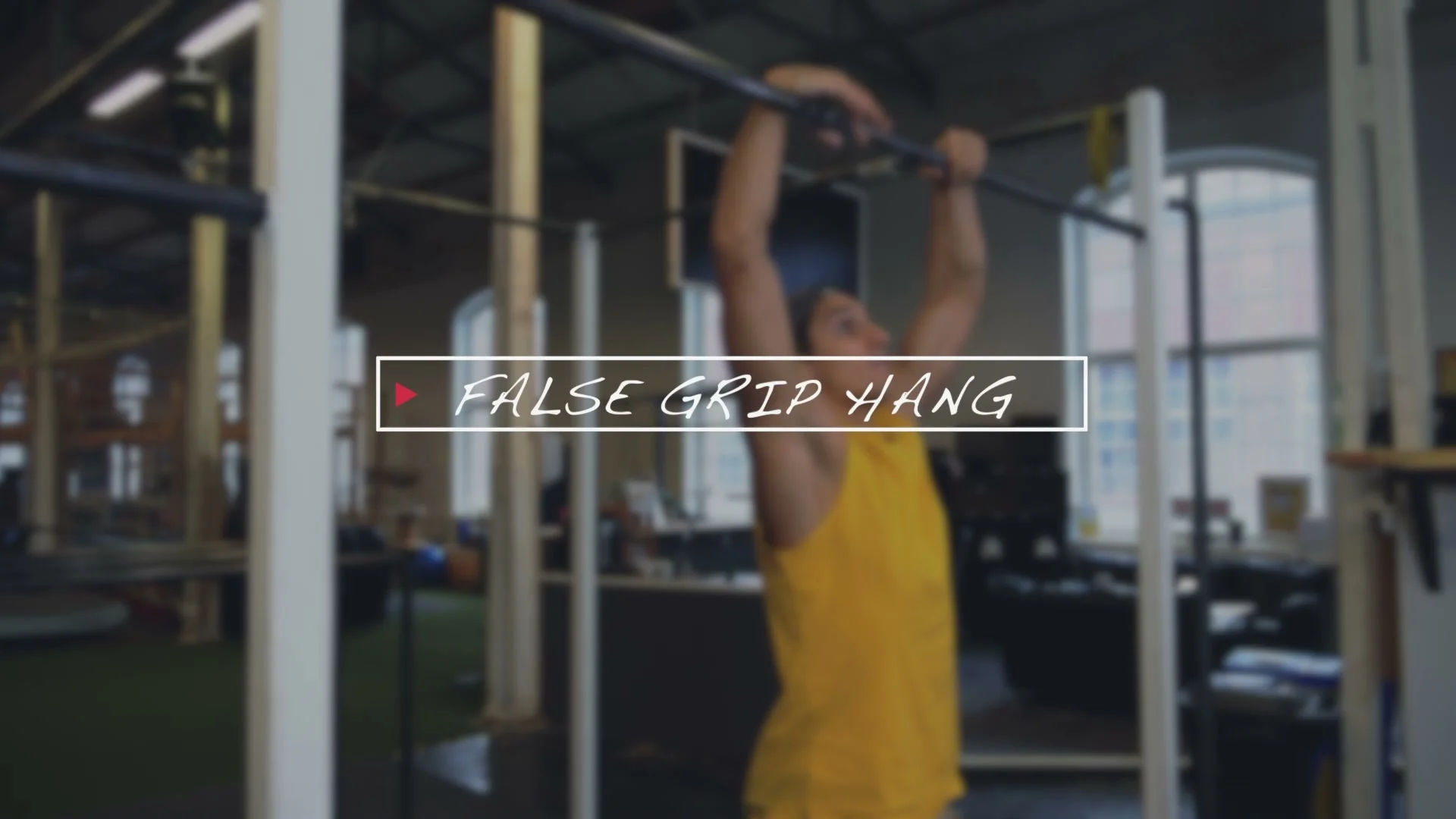
The false grip hang is the entry point into false grip training. Take the false grip on the bar and hang in that position. The arms can be slightly bent. The goal is simply to stay in the false grip position and build the grip strength and wrist conditioning the position requires.
Hold for 5 to 20 seconds depending on current strength, 3 to 5 sets per session. The first sessions will feel uncomfortable and the wrists will fatigue quickly. This is normal. The discomfort reduces as the grip adapts. This exercise should be performed before any other false grip work in the training session.
Exercise 2: False Grip Pull-Ups
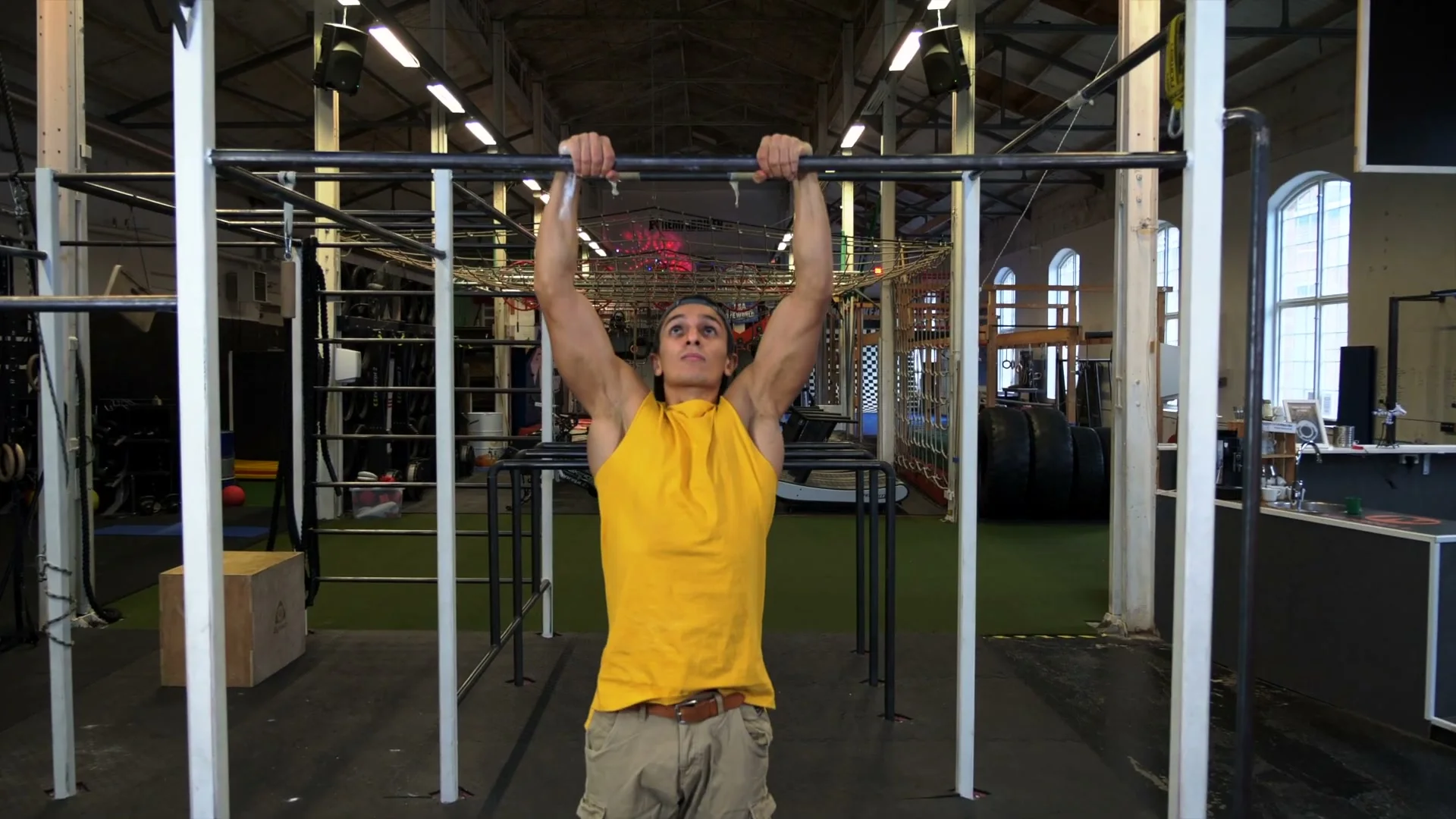
False grip pull-ups add the pulling movement to the grip. Take the false grip, then pull as high as possible. The goal is to pull the chest to the bar. If the false grip is lost during the pull, release the bar and restart with a new grip rather than continuing with a standard grip. The false grip must be maintained throughout the entire rep for the exercise to have value.
Do 1 to 5 reps with 5 sets. The rep count is low because maintaining the false grip under load is demanding. Quality matters more than quantity here. Each rep where the false grip is held through the full range is more valuable than multiple reps where the grip slips partway through.
Exercise 3: Deep Straight Bar Dips
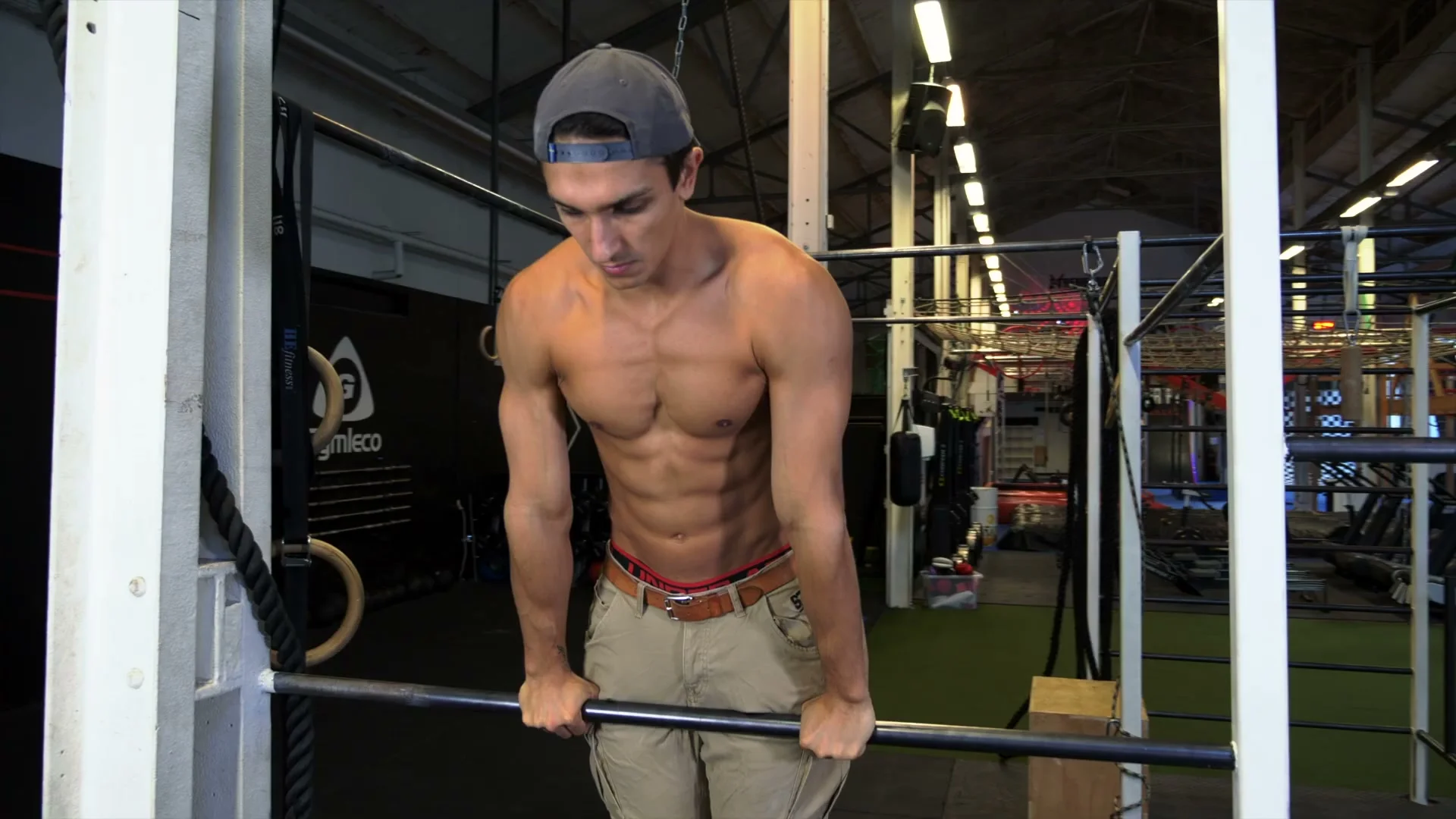
Deep straight bar dips target the hardest part of the slow muscle up: the transition between the pull-up and the dip. Standard dips are not sufficient. The transition in the slow muscle up requires the ability to press from a position where the elbows are roughly parallel with the bar, which is deeper than where standard dips typically begin.
Find a lower bar where you can jump up to the support position. Lower yourself as far down as possible, aiming to bring the elbows to bar level. Then press back up. Do 2 to 5 reps with 5 sets. This exercise builds strength specifically at the range the slow muscle up transition requires, which is different from the range standard dip training covers.
Exercise 4: Negative Muscle Up
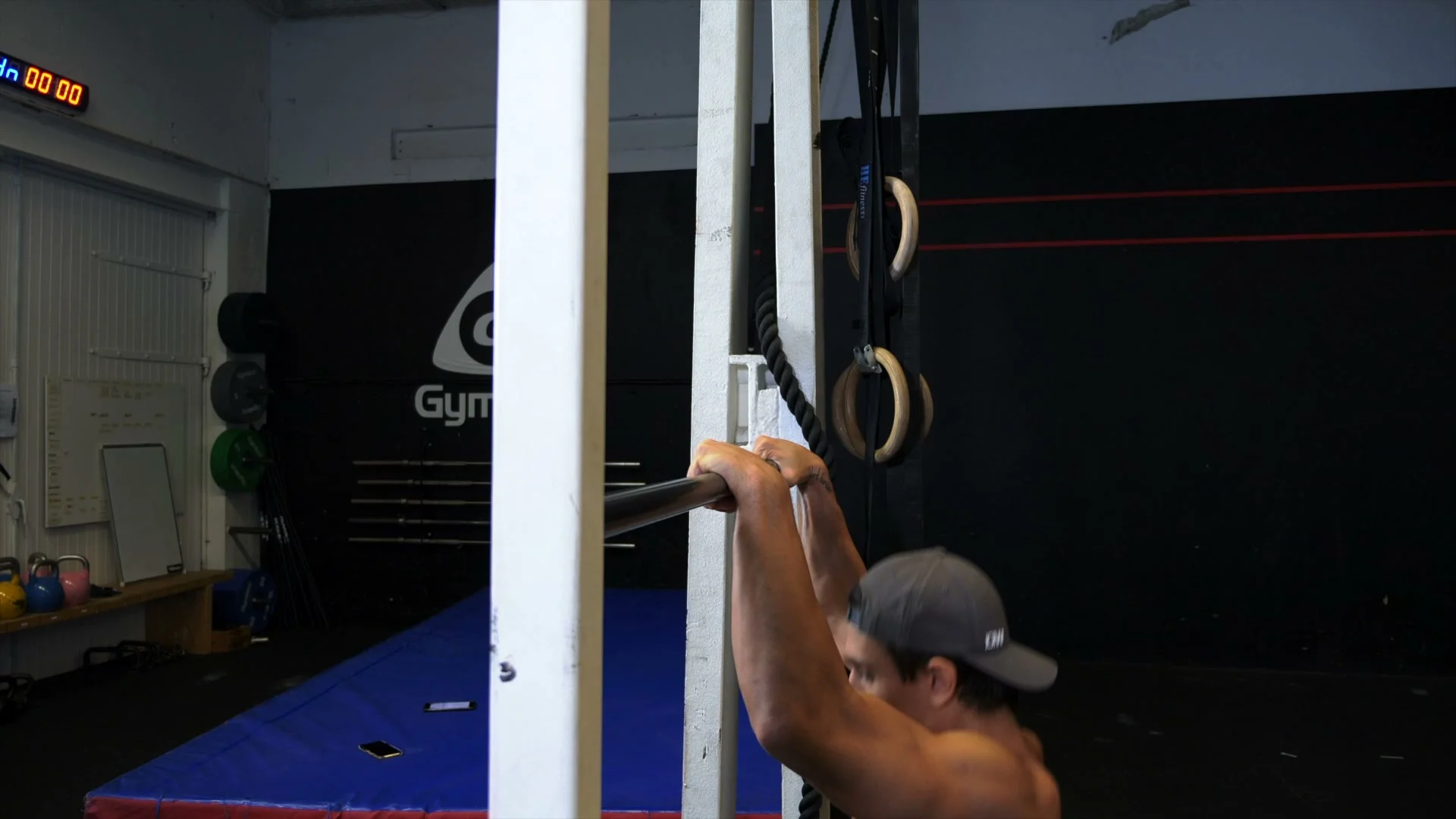
The negative muscle up trains the full movement pattern in the eccentric direction. Find a bar low enough to jump up to, start in the support position at the top, and lower yourself down slowly and with control to the dead hang position. Maintain the false grip throughout the entire descent. Do not drop, control the movement all the way down.
Do 2 to 5 reps with 5 sets. The negative builds the specific muscle memory and strength in the transition zone that the false grip pull-ups and deep dips target separately. It is the most complete preparation for the full movement because it rehearses the exact positions the slow muscle up requires, just in reverse.
Exercise 5: False Grip Stretch
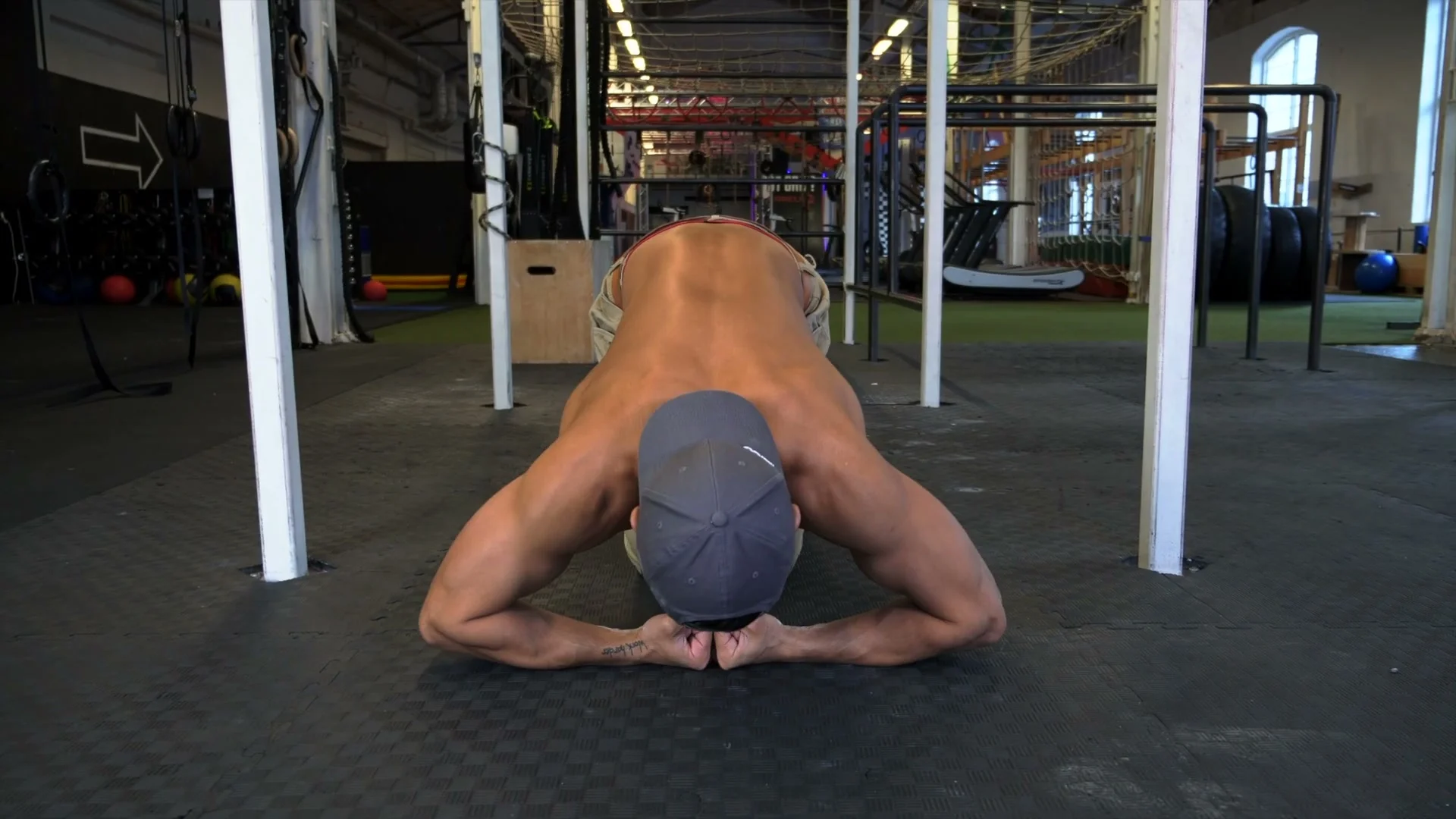
The false grip stretch addresses the wrist and forearm flexibility that makes the false grip position sustainable. Close the hand to a fist, then place the back of the hand on the floor. The back of the hand stays in contact with the floor throughout the stretch. Straighten the arms as much as possible without opening the fist. The stretch is felt through the wrist and forearm.
Do 10 reps for 3 sets during warm-ups. The closed fist is essential. Opening the hand during the stretch changes the mechanics and removes the specific stretch the false grip position requires. If the back of the hand rises from the floor during the arm extension, the range is the current limit and should be the target for improvement.
Training Tips
Two to three sessions per week is the recommended frequency for slow muscle up training. The false grip places consistent load on the wrist joints and surrounding structures that are not typically trained in standard calisthenics work. This is new stress on new structures. Beginning athletes sometimes notice mild elbow discomfort as the joints adapt to the false grip pull forces. If this happens, take two to three days of rest from the false grip exercises before returning. Pushing through significant joint pain is not productive.
Chalk is worth using from the first session. Liquid chalk or block chalk applied to the wrists and entire hands significantly improves grip security in the false grip position. Without chalk, the friction is often insufficient to hold the position reliably, which means sessions are limited by grip friction rather than actual strength.
Progress through all five exercises together rather than trying to master each one before moving to the next. The false grip hang and the stretch can be done in the same session as the pull-ups, dips, and negatives. Running all five in a session covers both the strength and the flexibility components the slow muscle up requires.
Frequently Asked Questions About the Slow Muscle Up
Do I need to learn the kipping muscle up before the slow version?
No. The slow muscle up is a different skill from the kipping version. Learning the kipping version first is common but not required. The false grip technique and the specific strength points the slow version requires can be built directly without the kipping version as a prerequisite.
Why does my wrist hurt when trying the false grip?
Wrist discomfort in the false grip is normal for beginners. The position places pressure on the wrist joint in a way that most athletes have not trained before. This discomfort reduces as the wrists adapt. Use chalk to reduce friction, keep holds short at first, and use the false grip stretch (exercise 5) between sessions. If the pain is sharp or persists beyond training days, reduce the volume and give the wrists more recovery time.
What is the hardest part of the slow muscle up?
The transition between the pull-up and the dip position is consistently the sticking point. Deep straight bar dips (exercise 3) and the negative muscle up (exercise 4) both target this specific range. If the movement stalls at the transition, increase the volume on these two exercises before increasing total muscle up attempts.
How many pull-ups do I need for the slow muscle up?
Three to five chest-to-bar pull-ups is the baseline. Standard pull-ups to chin height are not sufficient. The pull must bring the chest fully to the bar before the transition begins. If chest-to-bar pull-ups are not yet possible, building pulling strength to that standard is the prerequisite before slow muscle up training is productive.
How long does it take to learn the slow muscle up?
It varies significantly based on starting strength. Athletes who already have chest-to-bar pull-ups and straight bar dips can often get their first slow muscle up within four to eight weeks of working the five exercises consistently. Athletes building from the beginning prerequisites can expect two to four months. The false grip conditioning is often the bottleneck early on, so starting the grip training as early as possible shortens the timeline.
Can the slow muscle up be practiced on a standard pull-up bar?
Yes. Any bar that can hold the false grip position works. A straight pull-up bar without a wide grip is easier to take the false grip on because the narrower diameter gives the wrist a better angle. For the deep straight bar dips, a bar at roughly waist to chest height allows jumping to the top position. Outdoor calisthenics bars at different heights cover both requirements.
Daniel Flefil
Calisthenics coach with 11 years of experience, co-founder of Calixpert, and organizer of Beast of the Barz, one of the world's largest calisthenics competitions. Based in Stockholm. I write about training, equipment, and everything that goes into building a serious calisthenics practice.
More about Daniel →