
Daniel Flefil
January 21, 2020 · 6 min read
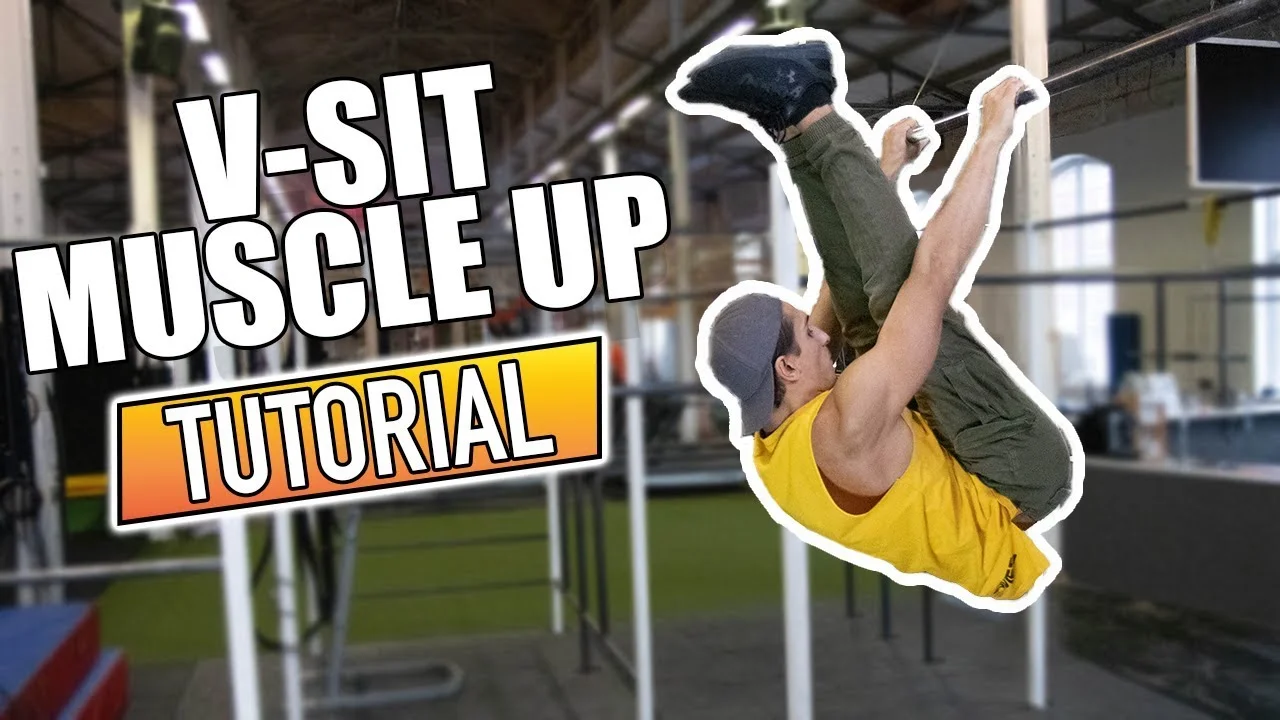
The V-sit muscle up is a bar skill where you swing, bring your straight legs over the bar, and pull yourself up into an L-sit position on top. It is also called the L-sit muscle up in street workout and freestyle calisthenics. The difficulty is moderate. The limiting factor is not strength but hamstring and lower back flexibility, which determines whether your legs can pass the bar cleanly with legs extended. If you already have that flexibility, the skill is surprisingly accessible. In this tutorial I cover the three warm-up exercises to build the mobility it requires, the four steps of the movement itself, and the most common technique errors that prevent it from working.
Watch the Full Tutorial
What Is the V-Sit Muscle Up?
The V-sit muscle up is a dynamic bar move where the athlete swings, brings both straight legs to the chest and passes them over the bar, then transitions into a support position on top of the bar with the legs extended forward in an L-sit. When executed cleanly, both arms stay straight throughout the leg-pass phase, the legs come over together, and the athlete finishes balanced on top of the bar with a clear L-sit position.
It trains hip flexor strength, hamstring flexibility, shoulder stability, and the body awareness to coordinate leg momentum with an upper-body pull. In street workout freestyle, it stands out because the leg position above the bar makes it visually distinct from a standard kipping muscle up. It appears in routines as either a standalone skill or as a transition into held positions at the top.
The strength requirement is lower than a strict muscle up. The flexibility requirement is higher. An athlete who can do a comfortable L-sit and has an explosive swing is already close to having everything the V-sit muscle up needs. For dedicated L-sit and V-sit strength work, see the V-sit tutorial with Malin Malle.
Prerequisites
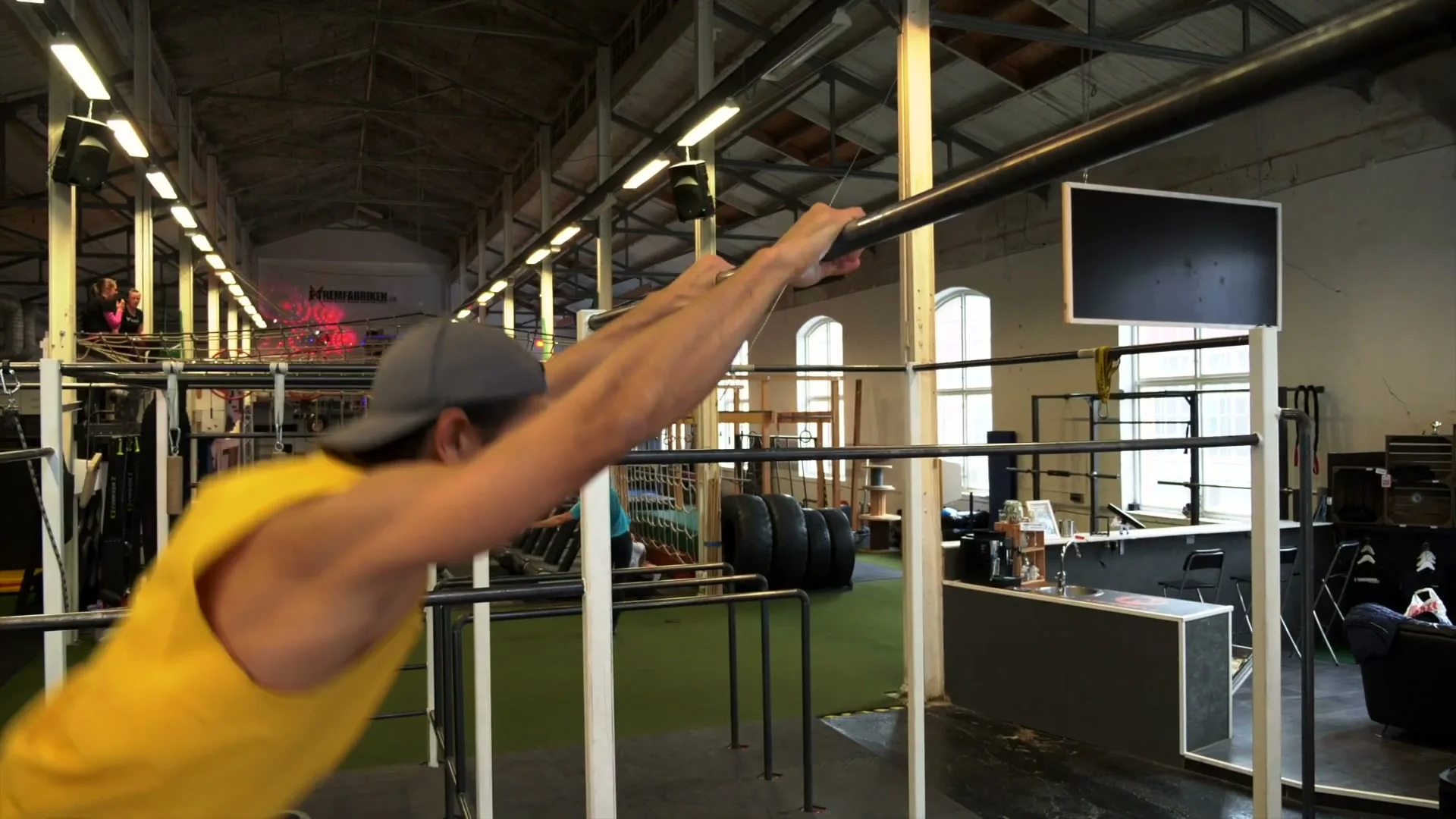
A controlled swing is the baseline requirement before starting. The V-sit muscle up is a swing-based skill. Without a consistent, powerful swing, the leg drive has no momentum to work with. If the swing is not yet reliable, that is the starting point before any V-sit muscle up work begins.
Hamstring and lower back flexibility are the second requirement. When the legs come to the chest and pass the bar, they need to travel through a deep hip flexion range with relatively straight legs. Tight hamstrings block this range and either prevent the legs from passing cleanly or force the athlete into a bent-leg version that does not produce the V-sit finish. The three warm-up exercises below address this directly.
Specific standards before starting:
- Controlled swing with feet reaching bar height
- L-sit hold for 10 seconds (on floor or parallettes)
- Comfortable hip flexion with straight legs past 90 degrees
Flexibility Preparation: Three Warm-Up Exercises
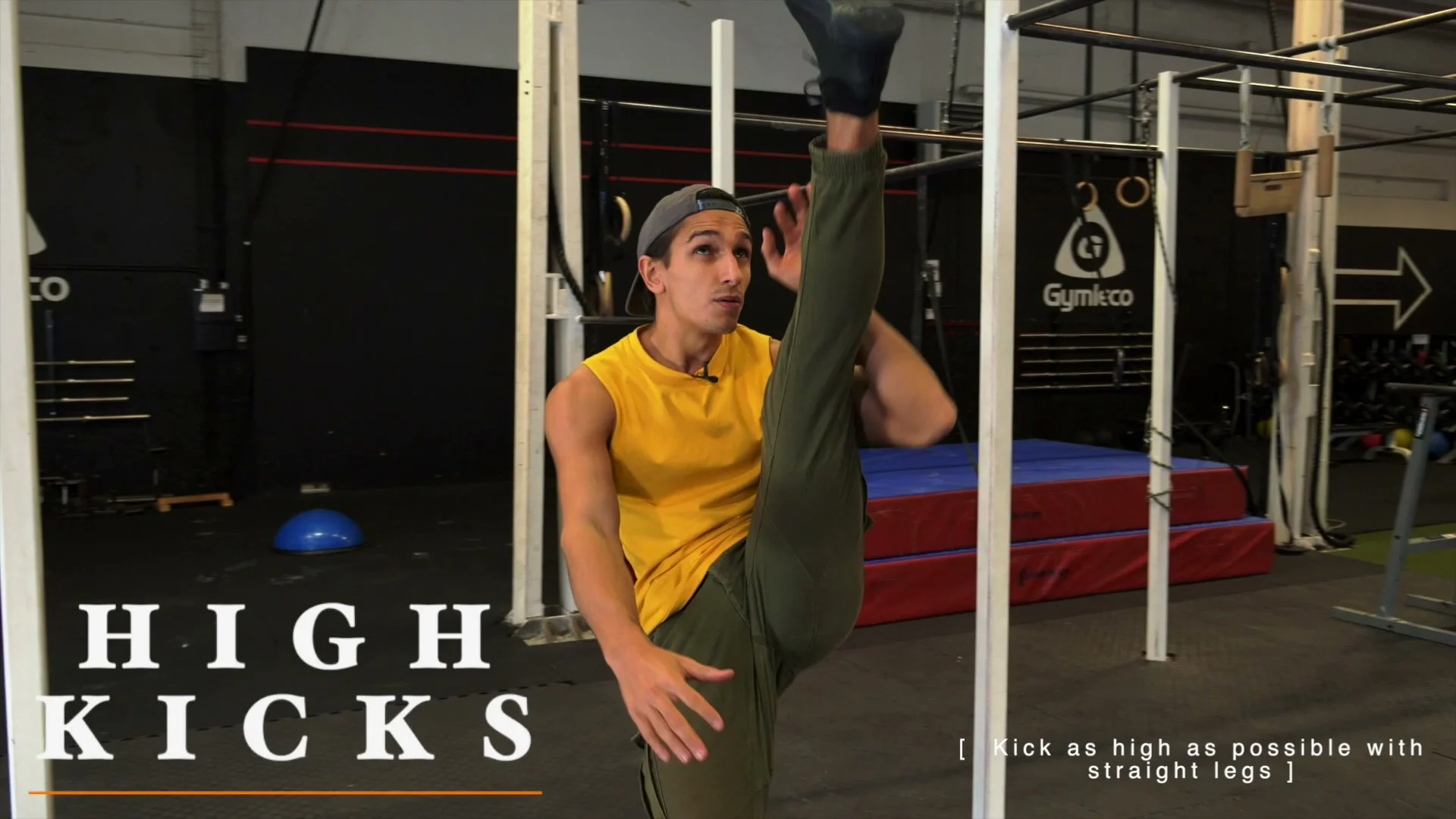
Before going to the bar, the hamstrings and lower back need to be prepared. Three exercises that target the specific flexibility the V-sit muscle up requires are shown in the tutorial. These work both as a warm-up before attempting the skill and as a long-term flexibility training method to add at the end of regular sessions.
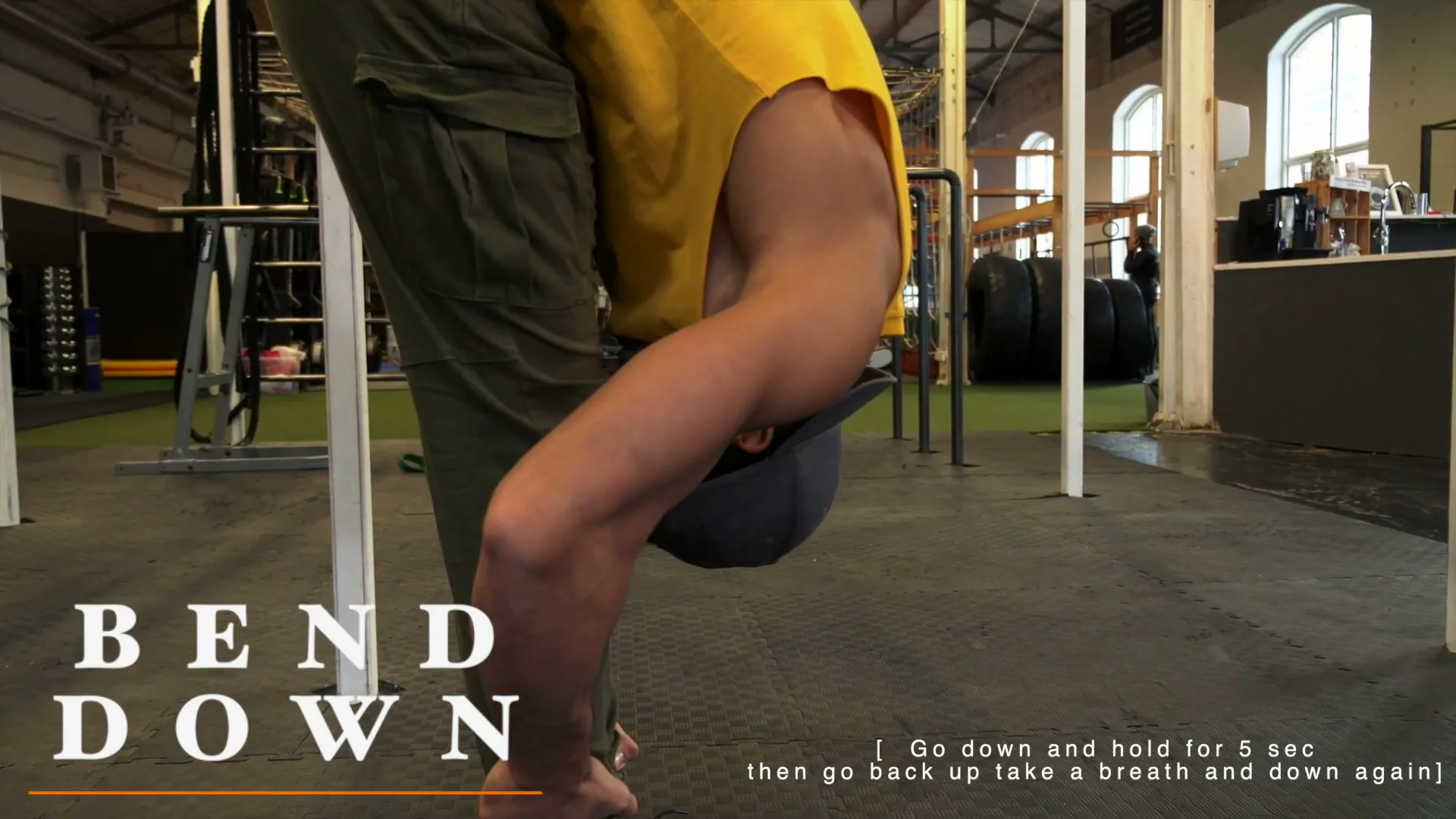
The three exercises target hamstring length, hip flexion range, and lower back mobility. Perform them before each session where the V-sit muscle up is being trained. They also serve as standalone flexibility work if the range is significantly limited and needs to be built over several weeks before the skill is accessible.
Technique: How the V-Sit Muscle Up Works
The V-sit muscle up has four distinct phases. Each one needs to work for the skill to complete.
The first is the swing. Start with a standard hanging swing on the bar. The swing builds the momentum the legs need to pass cleanly. Without a full, controlled swing, the legs cannot generate enough upward drive to pass the bar.
The second is the leg drive. At the back of the swing, as the body starts to swing forward again, bring both legs to the chest and drive them toward the bar. The legs pass over and past the bar together. Straight legs during the pass require more hamstring flexibility but produce the clean V-sit finish. The key timing point: the leg drive and the pass happen in one continuous motion with the forward swing.
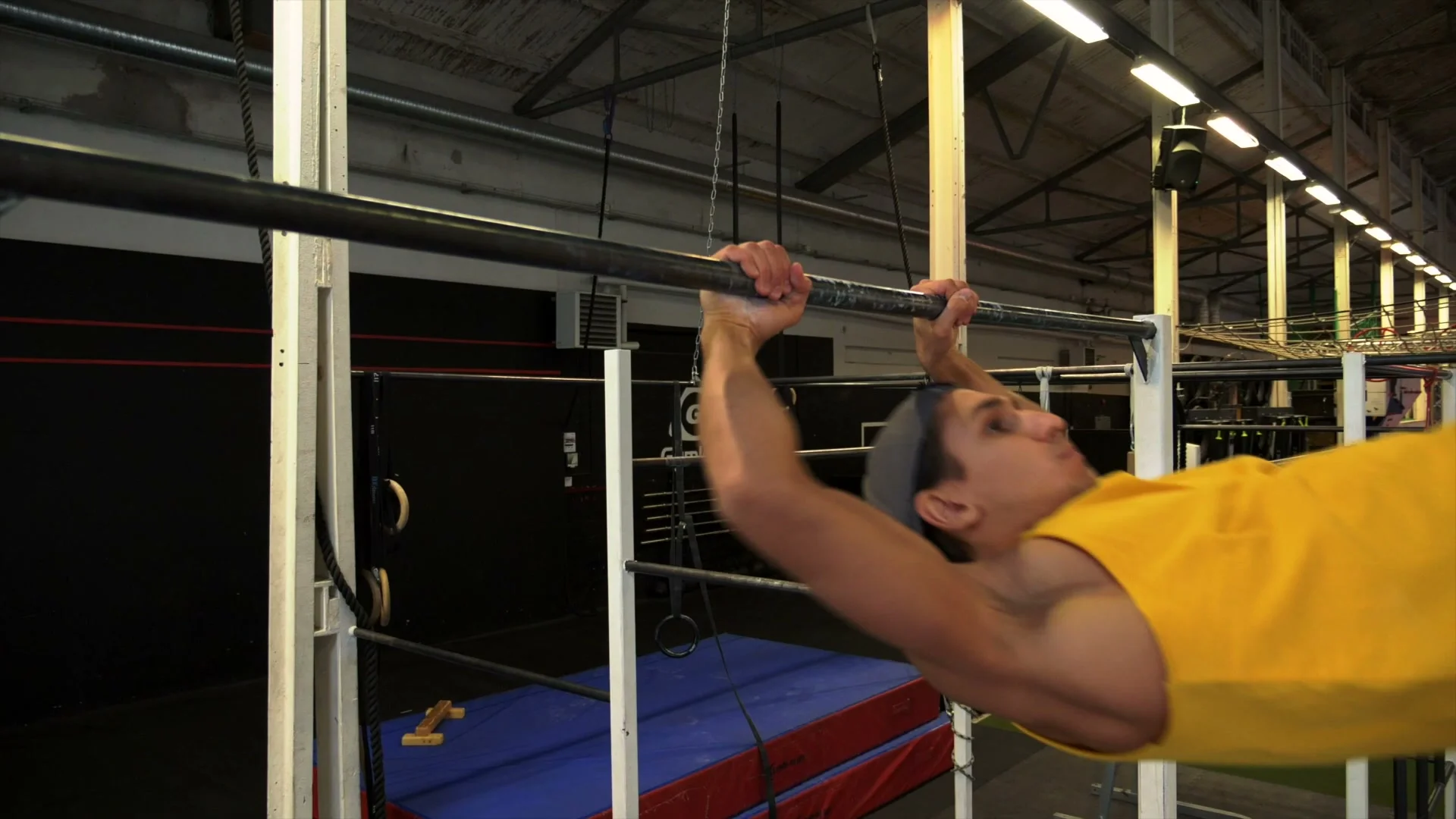
The third is the pull with straight arms. While the legs are passing the bar, the arms remain straight. This is the part most people miss. If the arms bend during the leg pass, the athlete is using arm strength instead of leg momentum to get over the bar. With straight arms, the leg drive does the work and the arms guide the transition. The pull upward comes immediately after the feet clear the bar, not before.
The fourth is the timing of the pull. The pull up into the support position happens directly after the feet have passed the bar. Not before, not after. If the pull happens too early, the legs have not passed and the transition fails. If the pull happens too late, the momentum is lost and the arms have to work harder. The exact moment is when the feet clear the bar.
Key Takeaway
Progression: Training From Zero to V-Sit Muscle Up
Stage 1: Build the Swing
Before any leg pass is attempted, build a swing where both feet consistently reach bar height on the forward peak. The swing quality here determines everything else. A weak swing means the legs cannot be driven over the bar regardless of flexibility. The swing should feel powerful but controlled, not chaotic.
Drive the swing from the whole body rather than just the legs. The lats, core, and hips all contribute to a swing that stays tight and generates height. Once the swing is consistent and reaches bar height, the next stage is accessible.
Stage 2: Tuck Version for Body Understanding
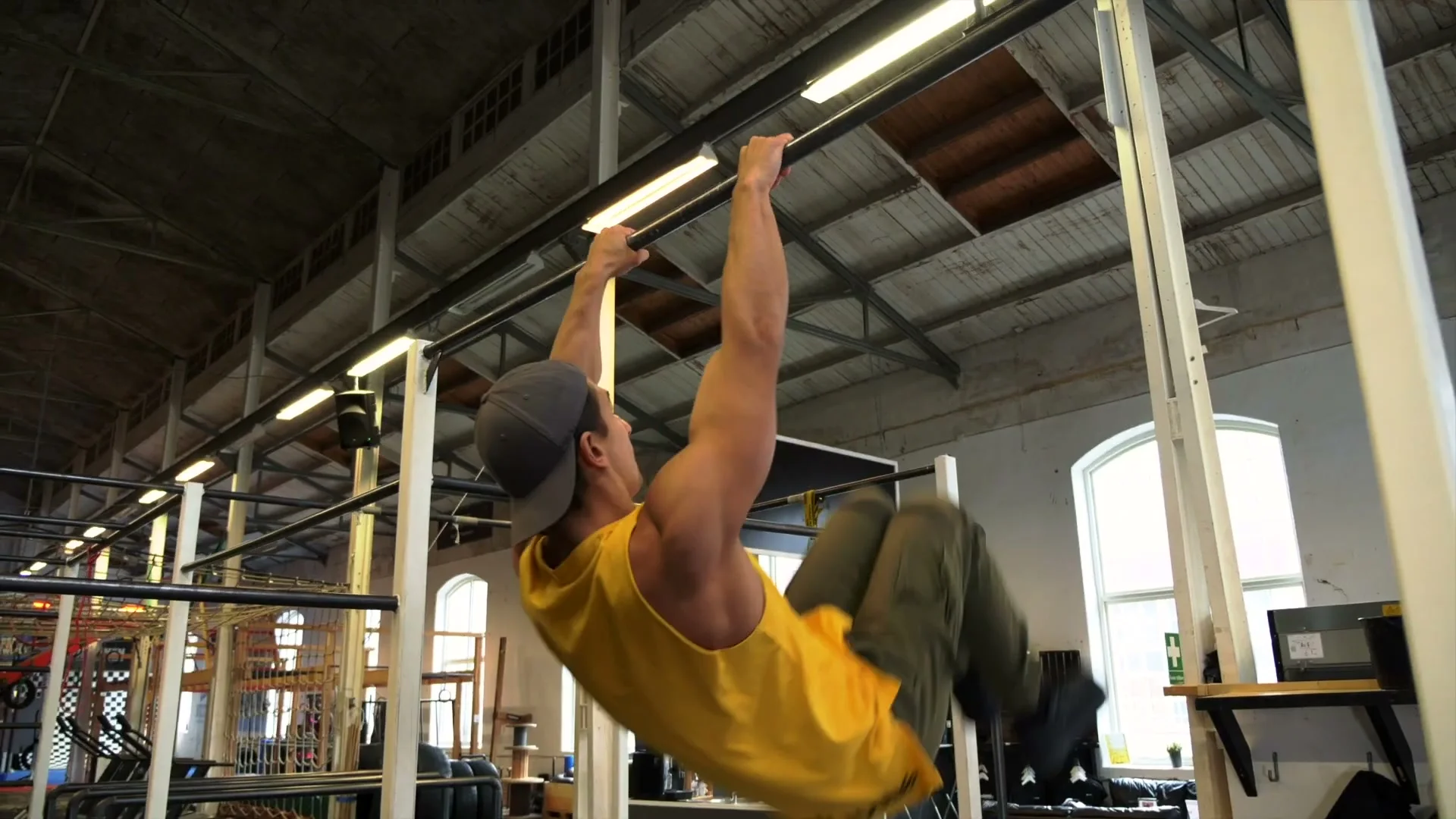
Before attempting the full V-sit muscle up with straight legs, do the tuck version. At the back of the swing, tuck the legs in toward the chest. Attempt to pull up slightly with straight arms, then swing back to the starting position without completing the move.
This drill teaches the body the coordination pattern. The timing of the leg drive relative to the swing, where the arms should be, and how the momentum feels through the transition all become familiar through the tuck version. Once the body understands the movement pattern, the straight-leg version is much easier to attempt.
Stage 3: Straight Legs to Chest
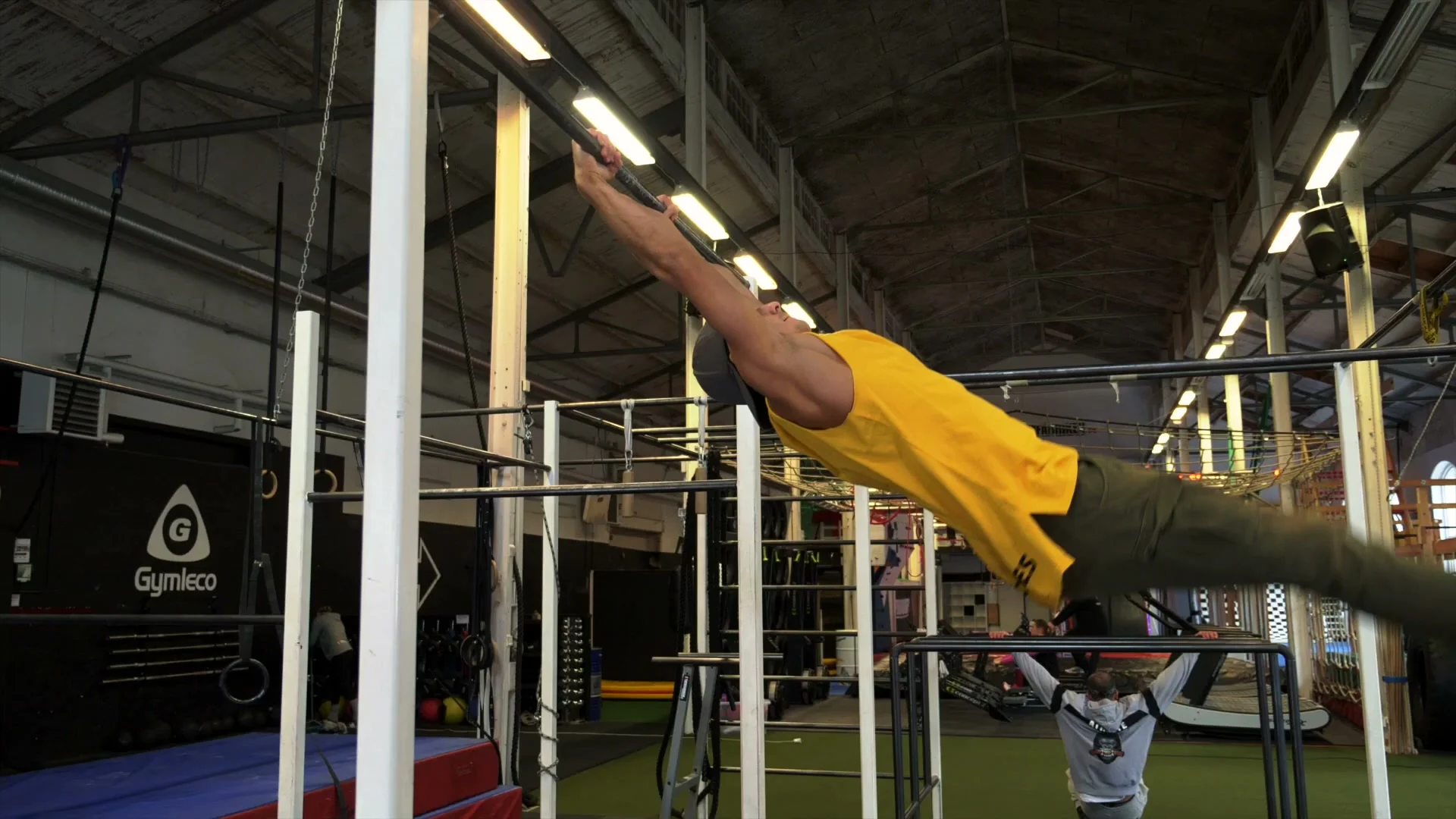
Now apply the full V-sit muscle up pattern. From the swing, drive both legs to the chest with the knees as straight as flexibility allows, pass the bar with the feet, and pull up directly after the feet clear. The arms stay straight during the leg pass.
The first successful attempts will rarely have fully straight legs. The legs will be partially bent. This is normal. Work the flexibility consistently between sessions and the leg position will straighten over time. The priority in this stage is getting the timing correct: straight arms during the pass and pull directly after feet clear the bar.
Stage 4: Full V-Sit Finish
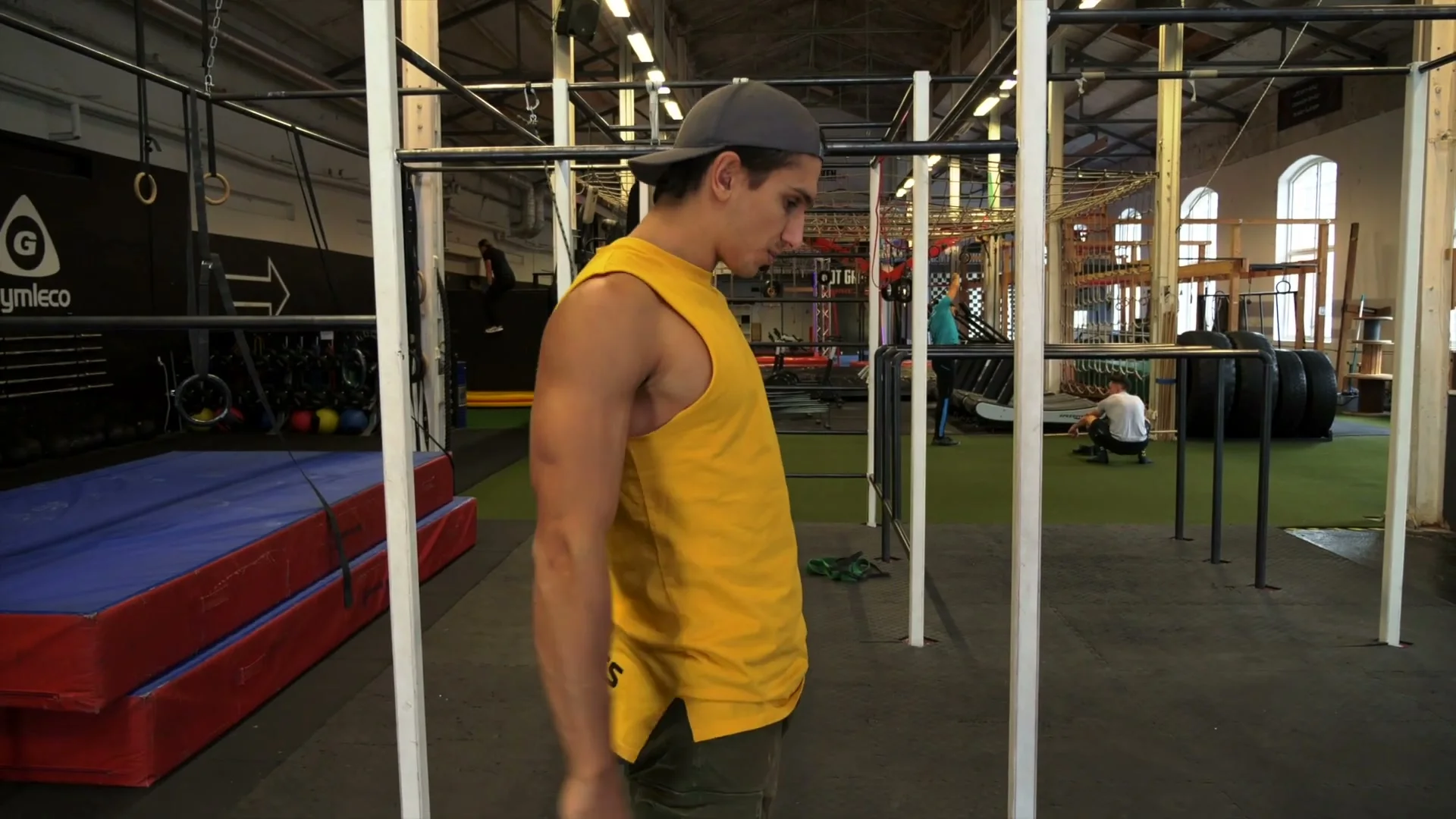
Once the bar pass is consistent, focus on the finish position. After pulling up, stabilize on top of the bar with the legs extended forward in an L-sit. This requires core and hip flexor strength to hold the legs up in the support position. If the legs drop after the pass, the L-sit hold needs direct work separate from the skill practice.
The full V-sit muscle up is complete when the pass is clean, the arms stay straight through the leg drive, the pull timing is correct, and the L-sit on top is held with both feet above bar height.
Common Mistakes
Arching the Back During the Pass
The most destructive form error is arching the lower back during the leg drive. This makes the hips drop, the legs cannot maintain the height needed to pass the bar cleanly, and the momentum is lost. The resulting movement looks more like dragging than a clean pass. Keep the core engaged and the hips up during the leg drive. A flat or slightly rounded lower back maintains the position.
Bending the Arms During the Leg Pass
Bending the arms during the leg pass removes the leg momentum from the equation and forces the arms to pull the body over the bar using strength alone. This makes the move significantly harder and eliminates the efficient use of the swing. Arms stay straight while the legs pass. The pull comes only after the feet clear the bar.
Wrong Pull Timing
Pulling up too early starts the transition before the feet have cleared the bar. The legs cannot pass and the move fails. Pulling up too late lets the momentum dissipate before the pull begins and increases the strength demand. The pull trigger is the exact moment the feet pass the bar. Practicing the tuck version drills this timing before the full straight-leg version is added.
Training Tips
Work on the three flexibility exercises at the end of every session regardless of whether V-sit muscle up attempts are in that session. Hamstring and lower back flexibility changes slowly. Consistent daily or near-daily flexibility work produces faster results than adding it only on skill days.
Film attempts from the side. The arm position during the leg pass and the back position during the leg drive are both invisible from the front and difficult to feel accurately. A side-view recording immediately shows whether the arms stayed straight and whether the back arched during the pass.
Once the move is consistent, chain it directly into a held L-sit on top of the bar. This combination builds both the skill and the strength to hold the finishing position. Working toward a 5-second L-sit hold after each successful V-sit muscle up gives the move a clear standard to reach rather than treating the bar pass as the only goal.
Frequently Asked Questions About the V-Sit Muscle Up
Do I need to be able to do a muscle up before the V-sit muscle up?
No. The V-sit muscle up uses leg momentum rather than pure arm pulling strength, which means it is accessible to athletes who cannot yet do a strict muscle up. The requirements are a controlled swing, L-sit flexibility, and hamstring range rather than the upper body pulling strength a strict muscle up demands.
What is the difference between a V-sit muscle up and an L-sit muscle up?
They are the same move with different names. V-sit muscle up and L-sit muscle up both refer to passing the bar with legs extended forward and finishing in a supported position on top with the legs horizontal. The two names are used interchangeably in street workout and freestyle calisthenics.
How flexible do I need to be for the V-sit muscle up?
The hamstrings need enough flexibility to bring the legs to the chest with relatively straight knees while hanging from a bar. This is not full pike flexibility, but it is more than what most beginners have. The three warm-up exercises shown in the tutorial build this range directly. Athletes who can hold an L-sit comfortably are typically close to the flexibility required.
Why do my legs keep bending during the bar pass?
Leg bend during the pass is almost always a flexibility limitation rather than a technique error. The hamstrings are not long enough to maintain straight legs through the hip flexion range the pass requires. Work the three warm-up exercises consistently between sessions. As the range improves, the legs will straighten during the pass. The tuck version allows the skill to be practiced while the flexibility is being built.
Can I practice the V-sit muscle up on any bar?
The move requires a bar with enough clearance above and around it to swing freely with full range. A bar that is close to walls, a low ceiling, or other obstructions will cut the swing short and prevent the leg drive from working. An outdoor calisthenics bar or a pull-up rig with open space is the appropriate setting.
How long does it take to learn the V-sit muscle up?
Athletes with existing swing ability and L-sit flexibility can often get their first successful attempt within one to three sessions of focused practice. The tuck version in stage 2 usually clicks quickly once the swing is established. The straight-leg version takes longer depending on flexibility. Consistent flexibility work between sessions is the main factor that determines how quickly the full clean version arrives.
Daniel Flefil
Calisthenics coach with 11 years of experience, co-founder of Calixpert, and organizer of Beast of the Barz, one of the world's largest calisthenics competitions. Based in Stockholm. I write about training, equipment, and everything that goes into building a serious calisthenics practice.
More about Daniel →