Daniel Flefil
January 31, 2020 · 8 min read
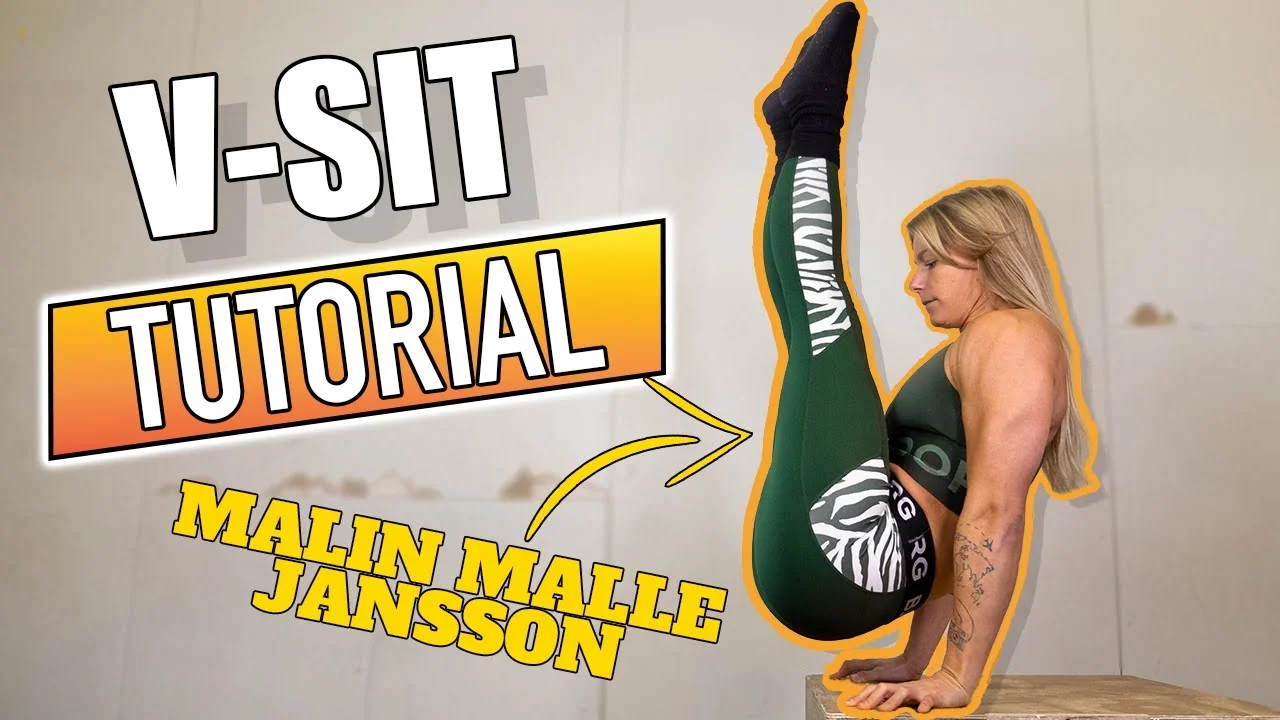
In this tutorial I train with Malin Malle Jansson, two-time Swedish street workout champion who came to calisthenics with eight years of cheerleading behind her and has one of the cleanest V-sits in the sport. She teaches five exercises that develop the specific combination of compression strength, hip flexor strength, and hamstring flexibility the V-sit requires. She also explains what to think about while holding the position and what most athletes get wrong. By the end, you will have five concrete exercises and a clear understanding of what the V-sit actually demands from the body.
Watch the Full Tutorial
What Is the V-Sit?
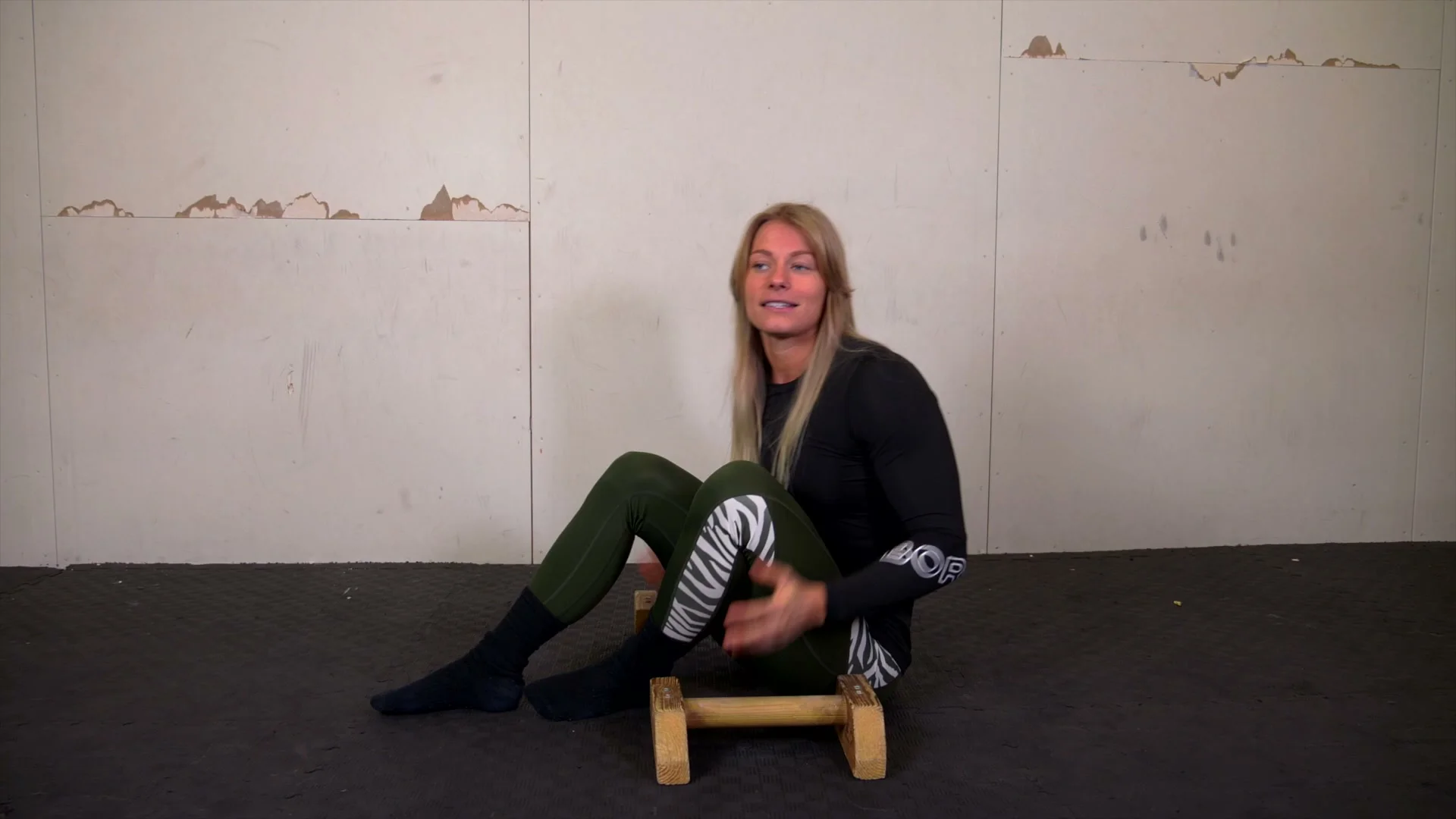
The V-sit is a calisthenics static hold where the athlete balances on the hands with both legs raised and extended forward, forming a V shape with the body. The legs are straight, the torso is upright or slightly inclined, and the entire position is held using compression strength, hip flexors, and the core rather than arm or shoulder strength.
The V-sit sits at the end of the L-sit progression. An L-sit has the legs horizontal at 90 degrees to the torso. A V-sit brings the legs above the horizontal line, increasing the hip flexion demand and requiring significantly more hamstring flexibility and compression strength. The move appears in floor, parallette, and bar training, including as the finish position in the V-sit muscle up.
The limiting factors are two distinct qualities: the strength to hold the legs up in compression, and the flexibility to extend them fully. Malin is direct about this: neither alone is sufficient. Both need to be developed together.
Prerequisites
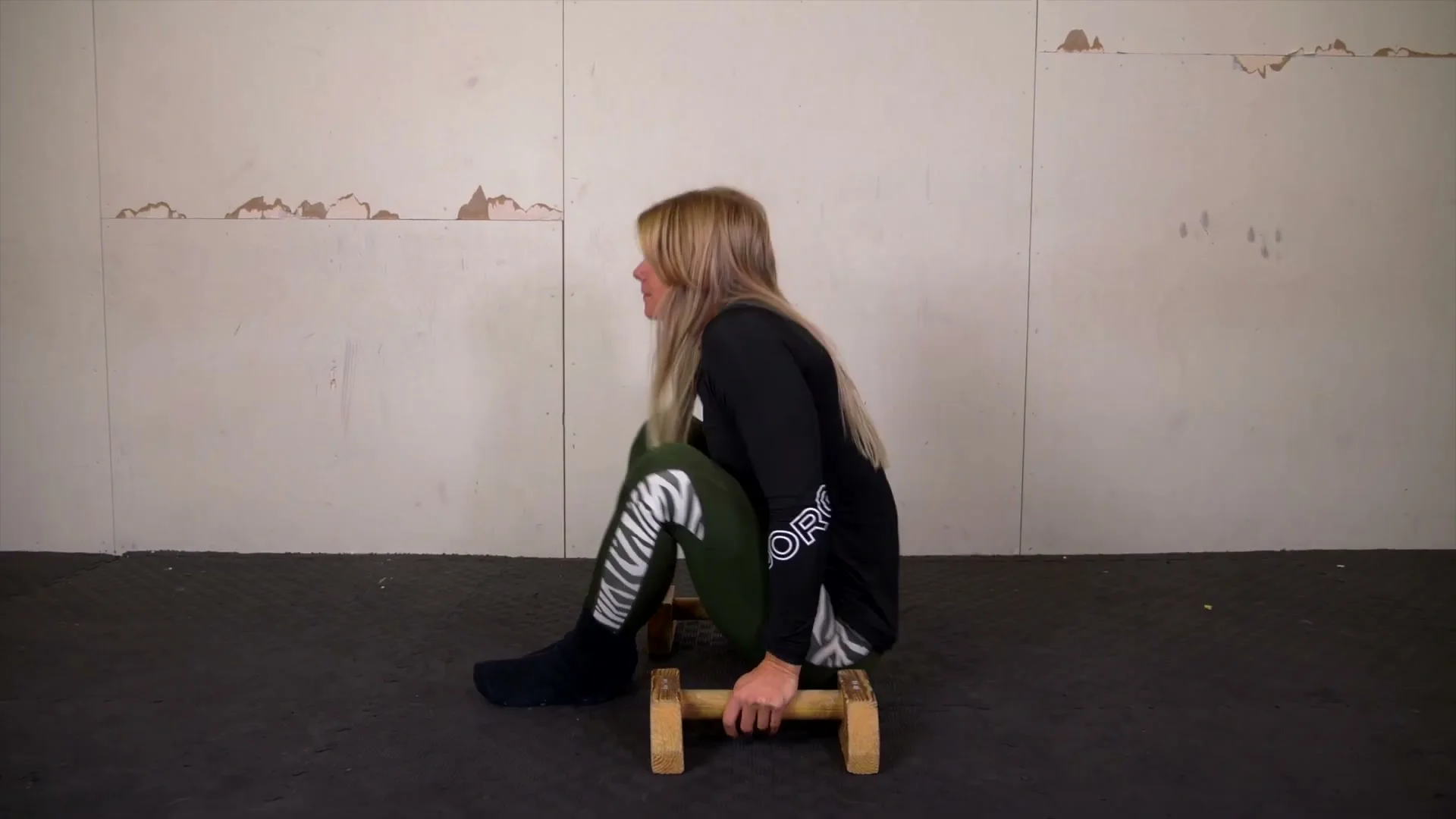
The V-sit is a beginner to intermediate skill in terms of access. Athletes with an existing L-sit and decent hamstring flexibility are already working within the relevant range. The prerequisite is the ability to hold a supported L-sit, which demonstrates enough compression strength to work the V-sit exercises productively.
Malin came into street workout with a cheerleading background that gave her both the core strength and the flexibility the V-sit needs. She describes her first attempts at the V-sit as already being reasonable. The two years it took her to reach the level she has today were spent refining form and building the strength and flexibility further, not starting from scratch.
Specific standards before starting:
- L-sit hold for 5-10 seconds on parallettes or floor
- Hamstring flexibility sufficient to reach toward the toes with straight legs
- Seated forward fold past 90 degrees
Technique: What the V-Sit Requires
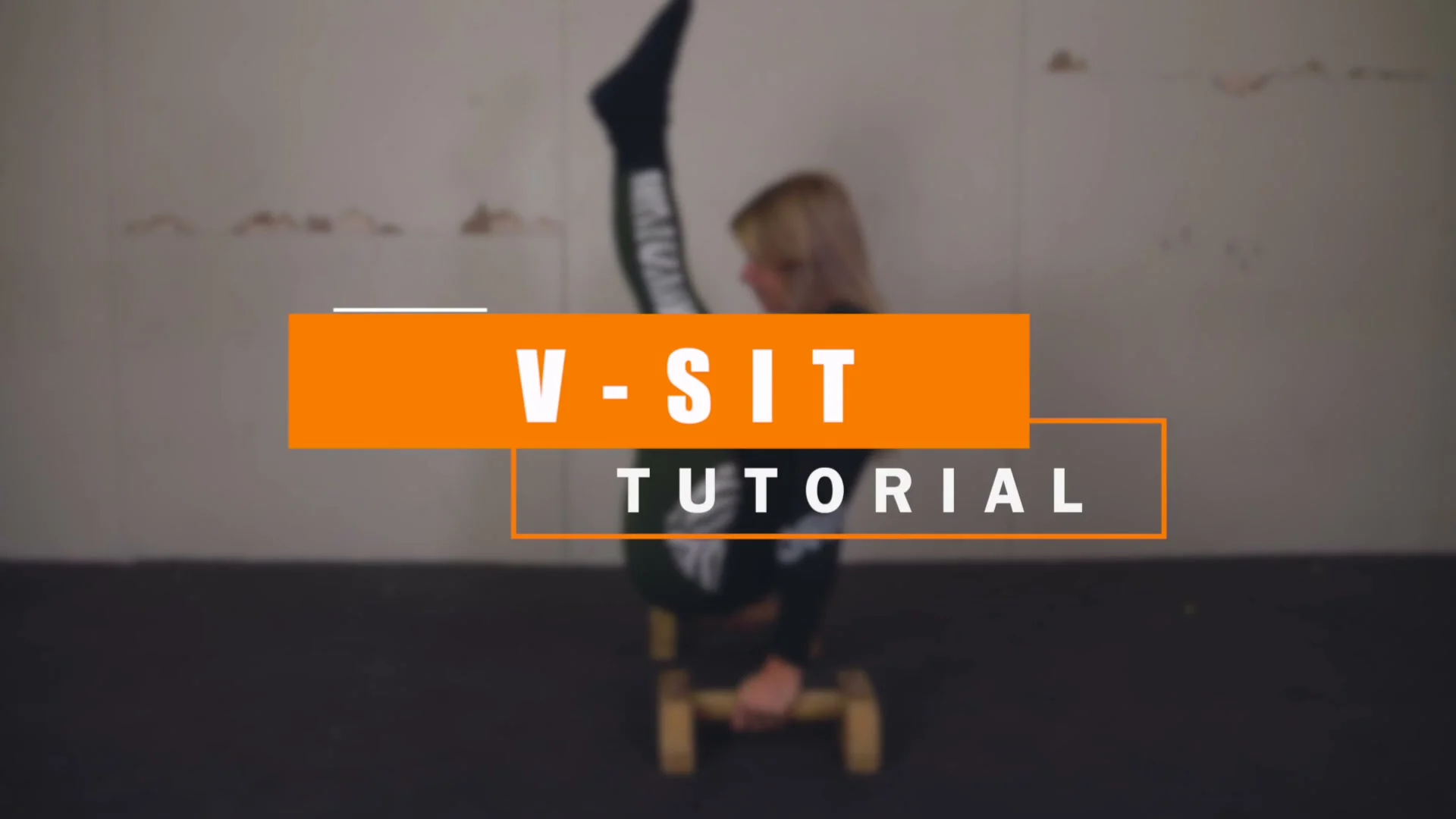
The V-sit has three physical requirements working at the same time. Compression is the most important and also the least understood.
Compression is a core activation pattern where the abdominals are drawn inward and upward, not pushed outward. Malin describes it as "sucking in the belly" rather than bracing it out. This inward activation is what gives the hip flexors the base they need to hold the legs in the raised position. Without active compression, the legs drop regardless of how strong the hip flexors are.
The second is pelvic tilt backward. Tilting the pelvis backward (posterior pelvic tilt) rotates the hip socket into a position where the hip flexors can work more efficiently to keep the legs elevated. Without this pelvic tilt, athletes tend to compensate by leaning the torso backward, which reduces the difficulty but creates a position that does not develop into a clean V-sit.
The third is scapular depression: pushing the shoulders down rather than letting them lift toward the ears. This keeps the torso upright and puts the arms in the correct position to support the body weight. Athletes who hold the shoulders high produce a hunched position that makes the legs look lower than they are and compromises the hold.
Key Takeaway
Exercise 1: Pike Stretch Against the Wall
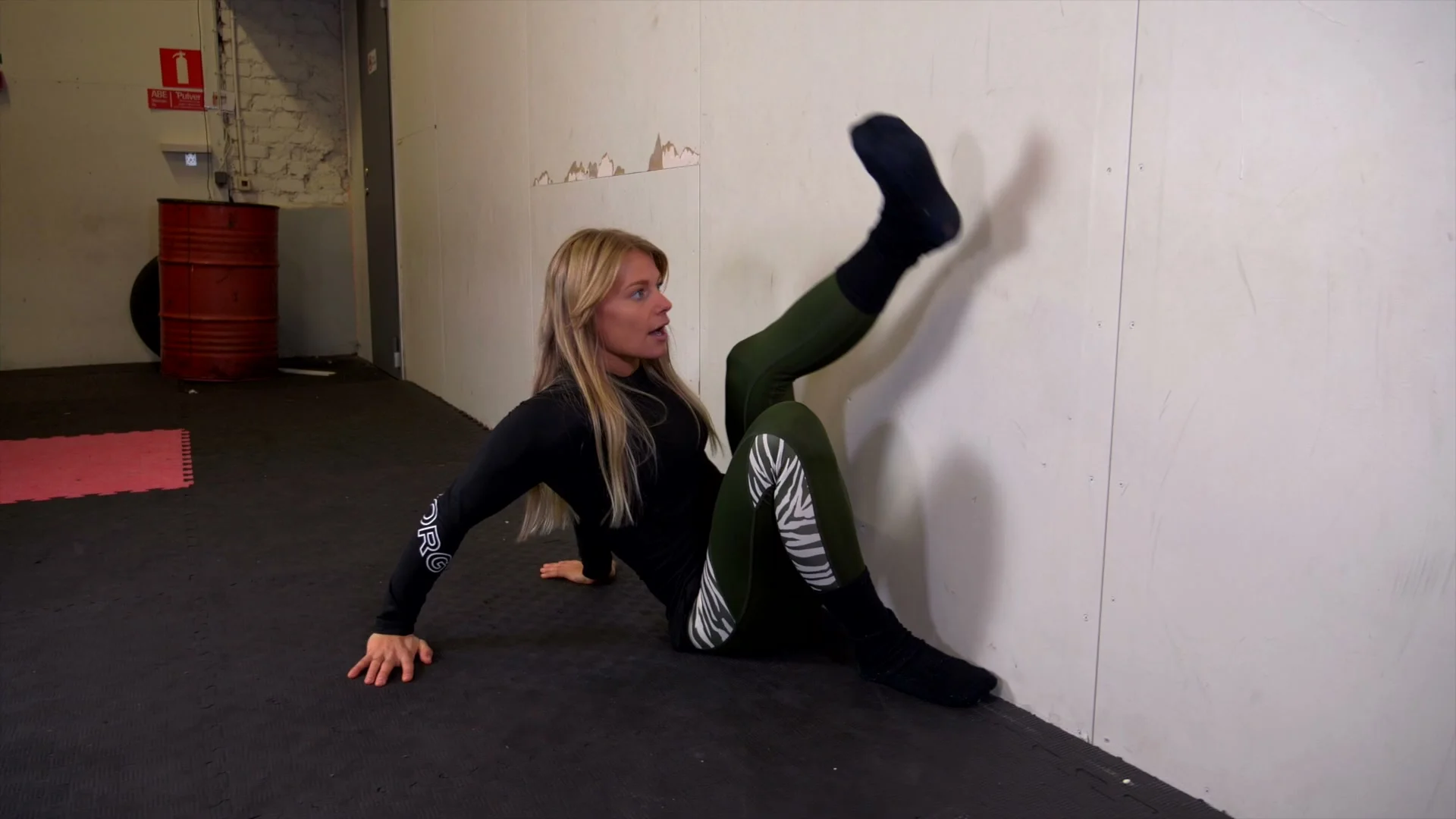
The pike stretch against the wall builds the hamstring and hip flexor flexibility the V-sit requires. Sit with the lower back and hips as close to the wall as possible, then put both legs up the wall, keeping them as straight as possible. Place the hands close to the body rather than reaching far forward. From there, press forward toward the legs, moving the torso as close to the legs as possible while keeping the back straight. Rounding the back reduces the hamstring stretch and limits the effectiveness of the exercise.
The goal is to bring the chest toward the straight legs, not to move the legs or to round the back to close the distance. The stretch is felt through the back of the thighs and the hip area. Hold the pressed-forward position for 20 to 30 seconds per set, and repeat 3 to 5 sets.
When to progress
Progress when the torso can touch the legs with the back straight and the legs fully extended against the wall.
Exercise 2: Compression Lifts
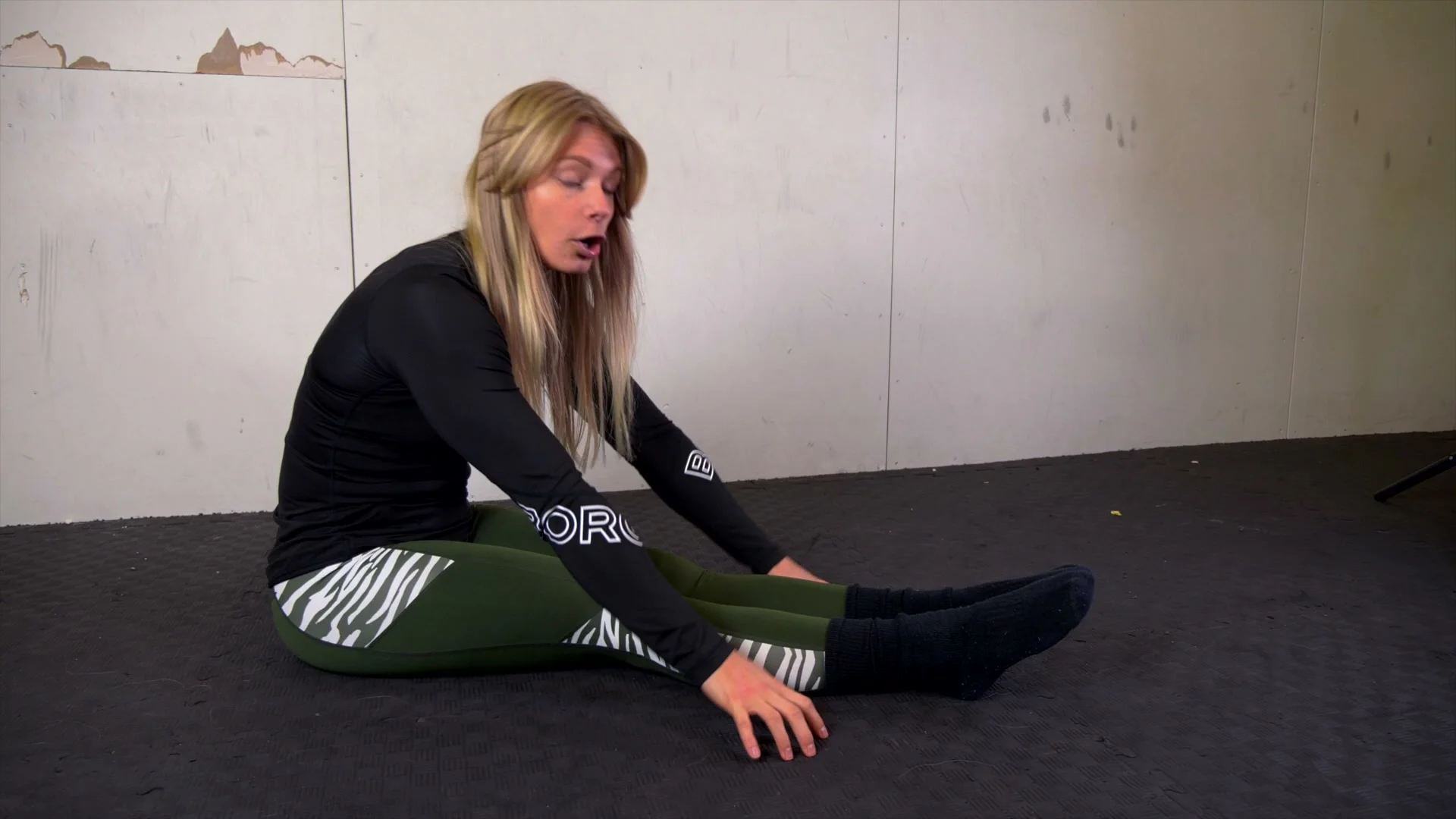
Compression lifts are the primary strength exercise for V-sit training. Sit on the floor with legs fully straight. Place the hands palms-down close to the knees. The further forward the hands are placed toward the feet, the harder the exercise becomes. Keep the upper body completely still. From this position, lift both legs as high as possible, then lower them back down.
The compression activation is critical throughout every rep. Suck the belly in before and during every lift. The belly sinking inward is the compression working. The belly pushing out means the core is bracing rather than compressing, which engages different muscles and does not transfer to the V-sit hold.
Do 5 to 15 reps for 3 to 5 sets depending on current strength. When the exercise becomes easy with hands near the knees, move them further forward toward the feet to increase the difficulty.
Exercise 3: High Knee Raises
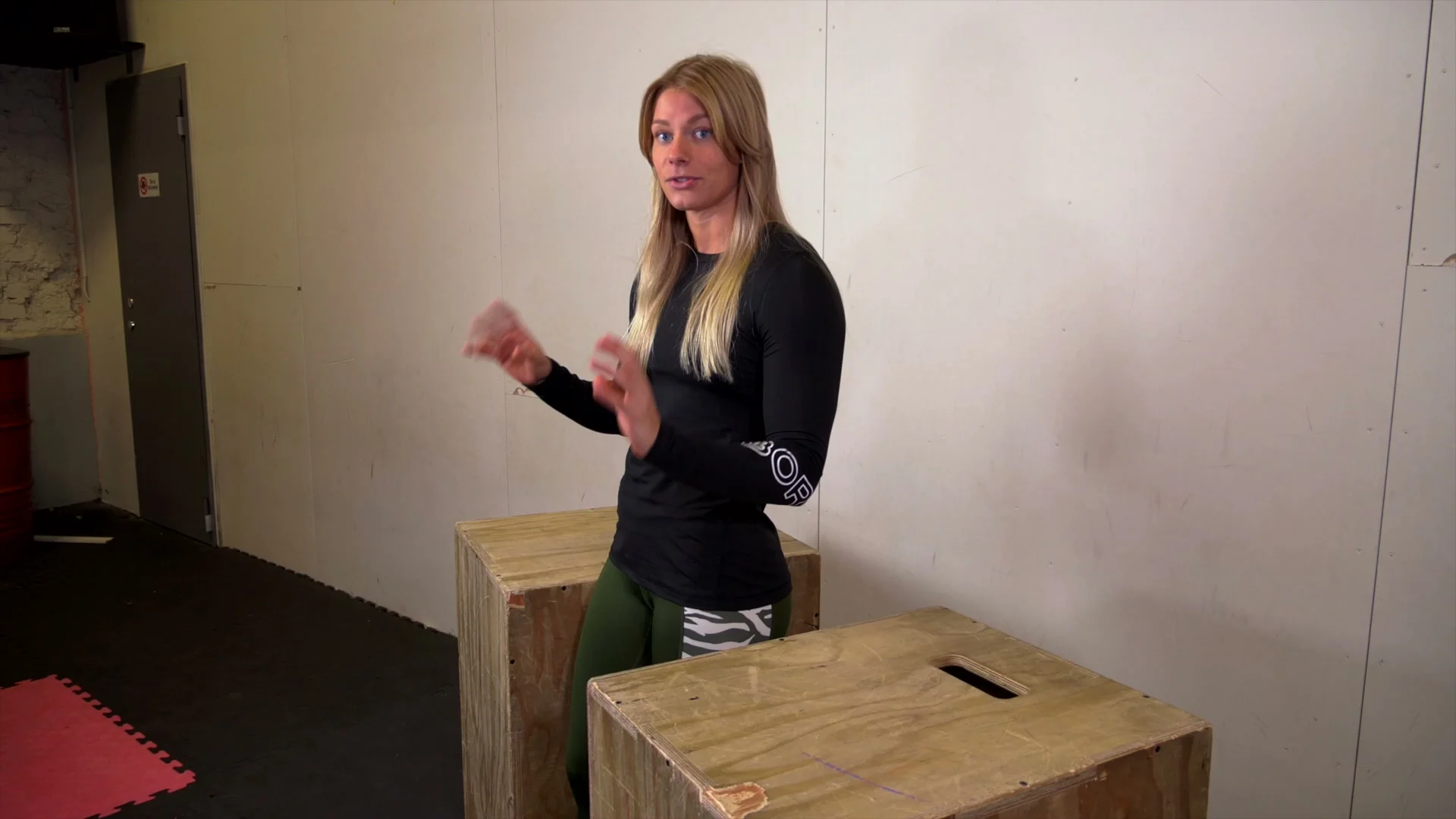
High knee raises require parallettes, boxes, or a similar raised support that allows the hips to lift freely. Place the hands on the supports, arms locked out. From this position, lift the knees toward the chest by tilting the pelvis backward. The pelvic tilt is what drives the height of the knee raise.
Leaning the upper body slightly backward is permitted in this exercise. The emphasis is on the pelvis rotating backward to bring the hips up rather than simply pulling the knees in with the hip flexors alone. The hips should come high. If the knees come up but the hips stay low, the pelvic tilt is not happening and the exercise loses its primary training effect.
Do 10 to 15 reps for 3 to 5 sets. The goal in each rep is maximum hip height through the backward pelvic tilt, not maximum repetition speed.
Exercise 4: Single Leg Extensions
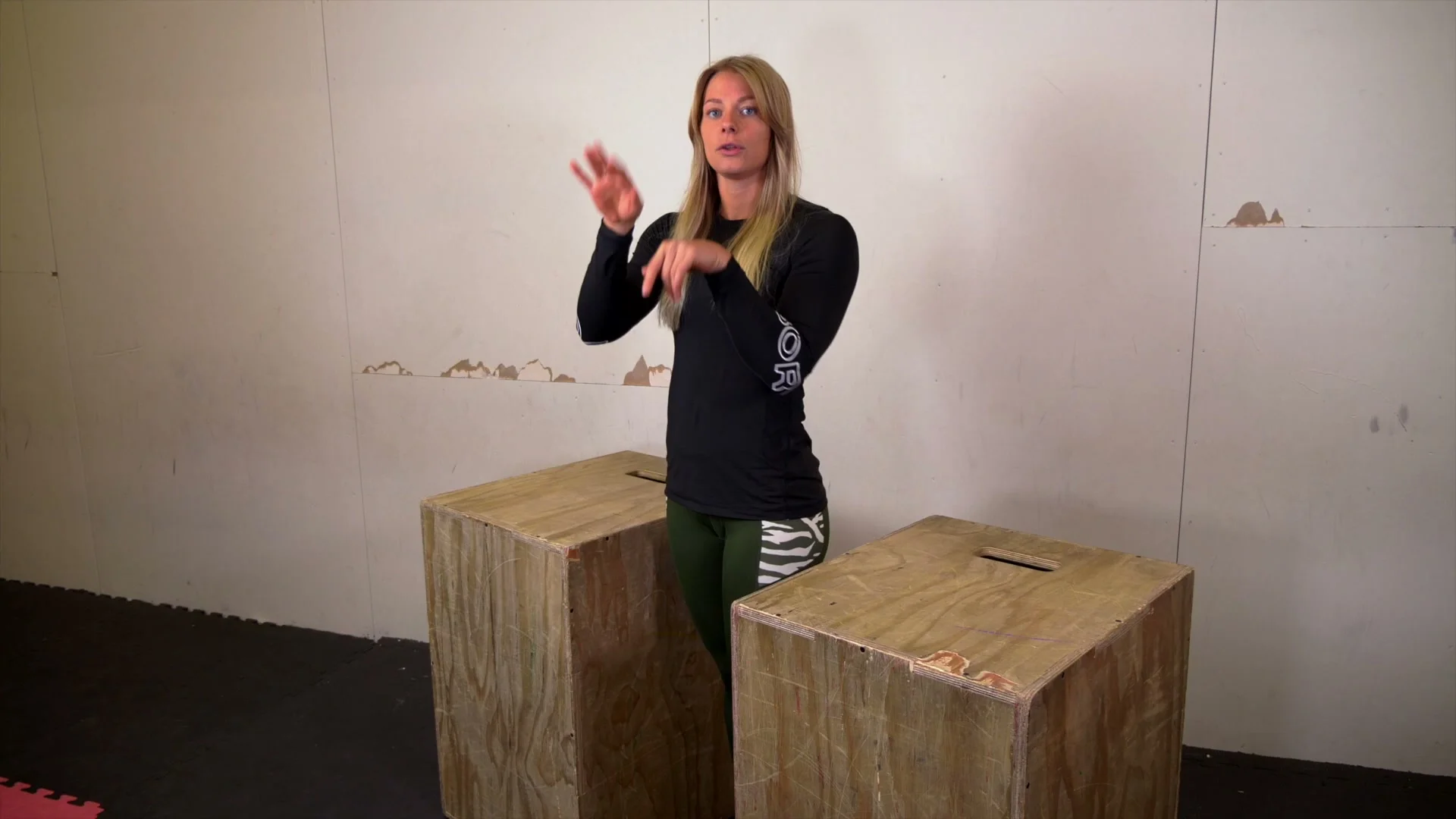
Single leg extensions are the closest exercise to the full V-sit. Malin notes that if an athlete can do this one, they are very close to the complete skill. Place the hands on the boxes or parallettes, hold a static knee raise position (both knees tucked in), then extend one leg at a time as slowly and as controlled as possible. Hold the extended position briefly before switching legs.
This exercise challenges compression strength, hip flexor strength, and hamstring flexibility in exactly the combination the V-sit requires. The extending leg must reach full extension with the knee straight. If the knee bends as the leg extends, the hamstring flexibility is still the limiting factor and the pike stretch (exercise 1) needs more time.
Do 5 to 10 reps per leg for 3 to 5 sets. Keep the non-extending leg in the tucked position throughout, not hanging down.
Exercise 5: Toes to Bar
Toes to bar is Malin's preferred exercise for building compression and hip flexor strength for the V-sit. It can be done on a free bar or on a wall bar. Malin recommends the wall bar when available because having something behind the back prevents the backward lean that is the most common compensation in toes-to-bar work. With the back against the wall, the only option is to use compression and hip flexor strength to lift the legs.
From a hang, lift the legs as high as possible with compression active throughout the movement. The compression activation before the legs leave the start position is what makes the movement V-sit specific rather than a standard hip flexor swing. Try to bring the feet to or above bar level, not just to 90 degrees.
Do 5 to 15 reps for 3 to 5 sets. Quality matters more than quantity. Each rep where compression is active from the start and the legs reach above horizontal is worth more than multiple reps where the legs swing.
Training Tips
Two sessions per week is the minimum for seeing V-sit progress. Malin's recommendation for faster development is three to four sessions per week. The skill has both a strength component and a flexibility component. Flexibility responds best to frequent, consistent work rather than occasional high-volume sessions. Two to three days between training the same exercises is sufficient recovery time.
All five exercises can be run in the same session. The pike stretch against the wall works best as a warm-up before the strength exercises. The toes to bar can come at any point. Compression lifts, high knee raises, and single leg extensions cover the strength side and can be organized in any order.
The most common mistake Malin identifies is leaning backward to lift the legs. Leaning backward reduces the hip flexion demand and makes the position easier, but it does not develop into a clean V-sit. Work the pelvic tilt and the compression instead of leaning backward. This is harder at first but is the direction that produces the skill.
Frequently Asked Questions About the V-Sit
How long does it take to learn the V-sit?
Malin learned a basic V-sit relatively quickly because of her cheerleading background, but getting the clean, high version she has today took about two years. For most athletes starting from scratch, the timeline depends on how quickly both the compression strength and the hamstring flexibility develop. Training three to four times per week with all five exercises gives the fastest progress.
What is the difference between an L-sit and a V-sit?
In an L-sit, the legs are horizontal at 90 degrees to the body. In a V-sit, the legs are raised above the horizontal line. The V-sit is harder because of the increased hip flexion demand and the greater hamstring flexibility required to keep the legs extended at that height.
What is compression and why does it matter for the V-sit?
Compression is a specific abdominal activation pattern where the belly is drawn inward and upward rather than braced outward. In the V-sit, this compression creates the trunk tension that allows the hip flexors to keep the legs elevated. Without active compression, the legs drop even if the hip flexors are strong, because the base they need to pull against is not in place.
Can I do the V-sit exercises at home without parallettes?
The pike stretch and compression lifts can both be done on the floor. High knee raises and single leg extensions require some kind of elevated support for the hands. Stacked books, low chairs, or yoga blocks can substitute for parallettes at home as long as they are stable enough to support bodyweight under load. The toes-to-bar exercise requires a bar.
Why do my legs keep bending when I try to extend them in the single leg extensions?
A bending knee during leg extension almost always indicates hamstring tightness rather than a strength issue. The hamstrings resist the straight-leg extension when they lack the flexibility to maintain that length under hip flexion load. Consistent work on the pike stretch (exercise 1) is the primary fix. Keep doing the single leg extensions as best you can while the flexibility develops.
Is the V-sit only for women or people with a flexibility background?
No. Malin's athletic background gave her an advantage in flexibility, but the V-sit is accessible to anyone who builds the required strength and flexibility systematically. Many male street workout athletes have strong V-sits. The compression strength is often the limiting factor for strength-focused athletes, while flexibility is the limiting factor for most beginners.
Daniel Flefil
Calisthenics coach with 11 years of experience, co-founder of Calixpert, and organizer of Beast of the Barz, one of the world's largest calisthenics competitions. Based in Stockholm. I write about training, equipment, and everything that goes into building a serious calisthenics practice.
More about Daniel →